
Brothels and "Soiled Doves" in the Copper Country
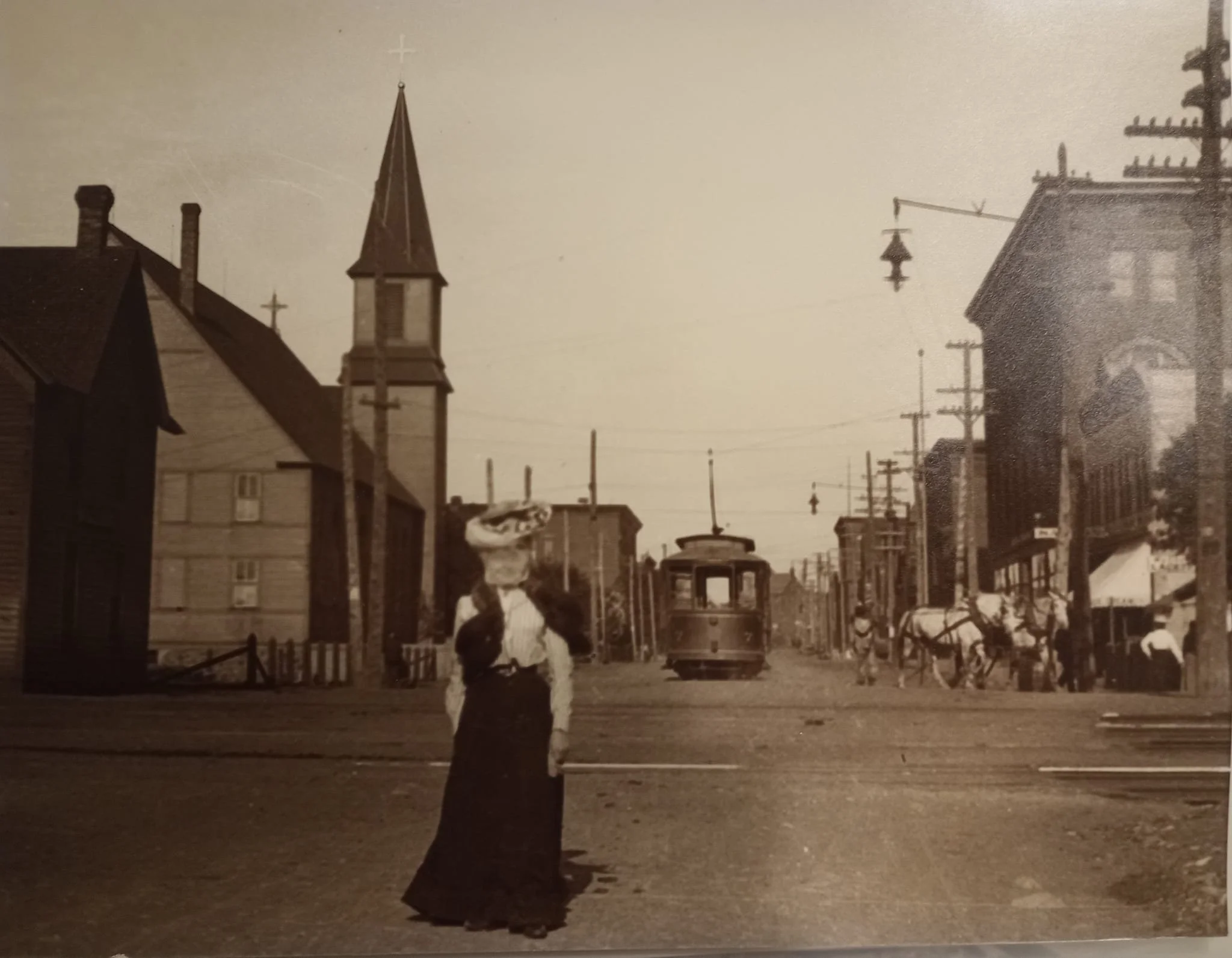
Like many growing, working-class regions in the late nineteenth and early twentieth centuries, the Copper Country had its share of vice. Large numbers of men, many of them unmarried, moved into the area as mining, lumber, and railroad jobs reshaped its streets and neighborhoods. In their limited hours away from work, these men looked for ways to spend their time off. As a result, the expanding towns saw not only a proliferation of pubs and saloons, but also what newspapers of the time described as “dens of vice,” “houses of ill fame,” and “disreputable houses.” Newspapers of the period often referred to sex workers as “soiled doves,” a euphemism commonly used in late nineteenth-century reporting.
Sex workers in the Copper Country included both local women and those who arrived specifically for work. The communities’ responses to brothels in their towns were mixed. The newspapers openly stated that the women should not be harassed while publishing letters from concerned citizens who wanted the establishments closed. The police response was also mixed. While some people found guilty of crimes related to sex work were given harsh jail times, others simply got a small fine and were released. When large trials were attempted in order to charge them with greater crimes, witnesses disappear, testimony is unclear, and offenders are released. What follows are verbatim newspaper accounts, presented chronologically, that show how sex work was discussed, regulated, and punished in Copper Country towns. Context is provided where needed to clarify people, places, and terminology.
Content warning: while nothing vulgar is discussed and no lewd language is used, the topics at hand are adult by nature.
November 25, 1875, unk., “The Portage Lake Gazette”
Would It Have Been the Same in the Case
of a Man?
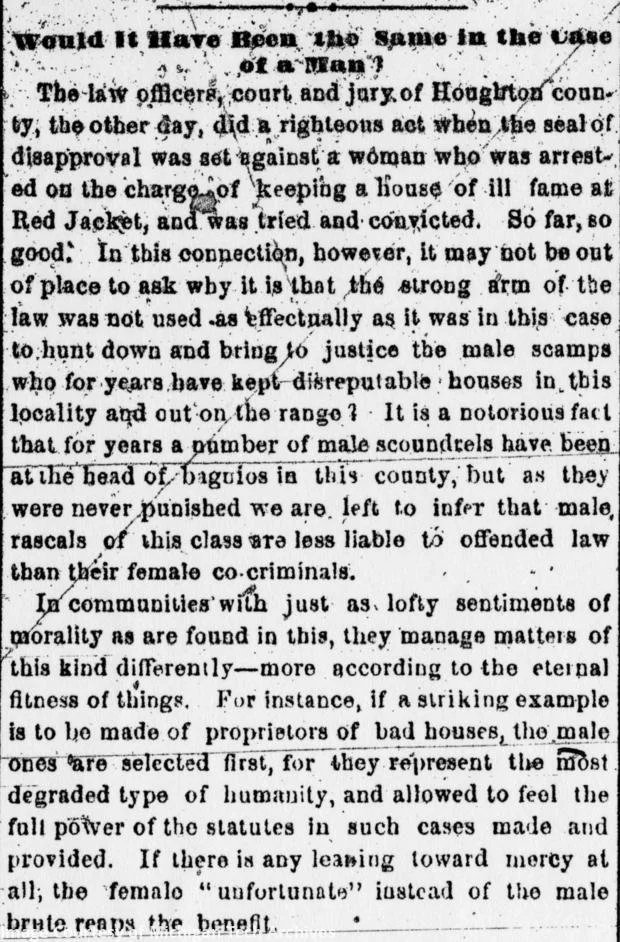
“The law officers, court, and jury of Houghton county, the other day, did a righteous act when the seal of disapproval was set against a woman who was arrested on the charge of keeping a house of ill fame at Red Jacket, and was tried and convicted. So far, so good. In this connection, however, it may not be out of place to ask why it is that the strong arm of the law was not used as effectually as it was in this case to hunt down and bring to justice the male scamps who for years have kept disreputable houses in this locality and out on the range? It is a notorious fact that for years a number of male scoundrels have been at the head of bagnios in this county; but as they were never punished we are left to infer that male rascals of this class are less liable to offended law than their female co-criminals.
In communities with just as lofty sentiments of morality as are found in this, they manage matters of this kind differently—more according to the eternal fitness of things. For instance, if a striking example is to be made of proprietors of bad houses, the male ones are selected first, for they represent the most degraded type of humanity, and allowed to feel the full power of the statutes in such cases made and provided. If there is any leaning toward mercy at all; the female “unfortunate” instead of the male brutes reaps the benefit.”
The earliest available article about sex work in the area is notably progressive for its era and asks about the different treatment for men and women involved in the business by law enforcement. It explains that while it is good that a madam (woman who manages a brothel) was recently arrested, there are definitely many other brothels are in the area owned by men that are left alone by officials. However, although the Houghton County courts did eventually fill their dockets with these men, a disparity in punishment is noticeable between them and the women they employed. Notably, the men that frequent the brothels (Johns) are hardly ever mentioned, let alone punished.
December 17, 1896 (pg. 4) “The Calumet News”
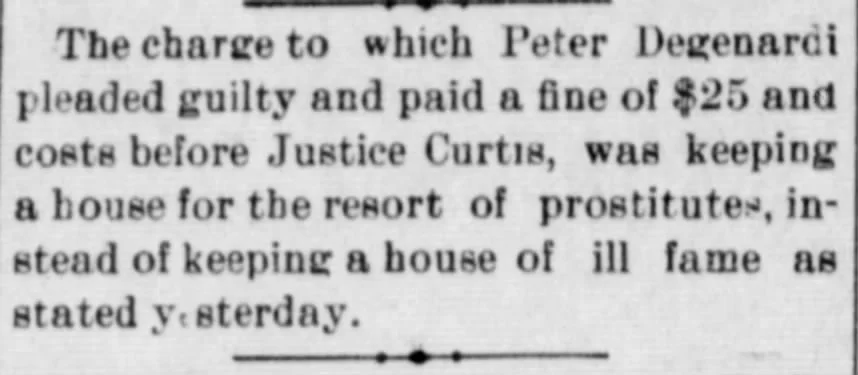
“The charge to which Peter Degenardi pleaded guilty and paid a fine of $25 and costs before Justice Curtis, was keeping a house for the resort of prostitutes, instead of keeping a house of ill fame as stated yesterday.”
January 27, 1897 (pg. 8) “The Calumet News”
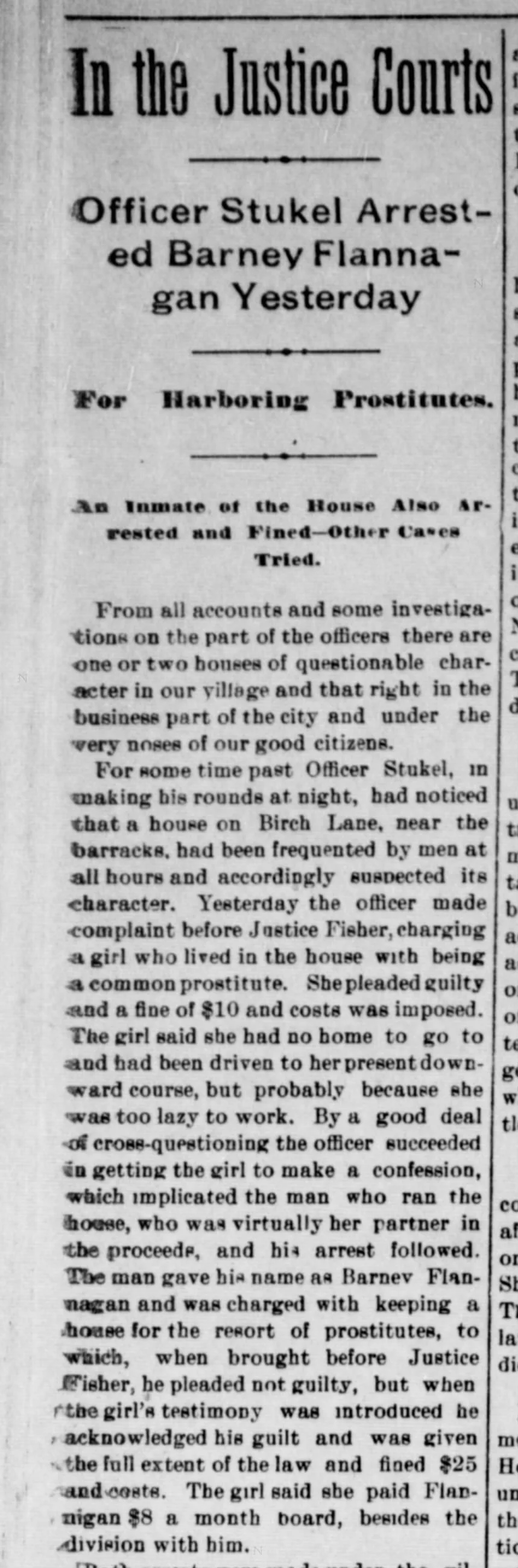
“Officer Stukel Arrested Barney Flannagan Yesterday For Harboring Prostitutes.
An Inmate of the House Also Arrested and Fined—Other Cases Tried.
From all accounts and some investigations on the part of the officers there are one or two houses of questionable character in our village and that right in the business part of the city and under the very noses of our good citizens.
For some time past Officer Stukel, in making his rounds at night, had noticed that a house on Birch Lane, near the barracks, had been frequented by men at all hours and accordingly suspected its character. Yesterday the officer made complaint before Justice Fisher, charging a girl who lived in the house with being a common prostitute. She pleaded guilty and a fine of $10 and costs was imposed. The girl said she had no home to go to and had been driven to her present downward course, but probably because she was too lazy to work. By a good deal of cross-questioning the officer succeeded in getting the girl to make a confession, which implicated the man who ran the house, who was virtually her partner in the proceeds, and his arrest followed. The man gave his name as Barney Flannagan and was charged with keeping a house for the resort of prostitutes, to which, when brought before Justice Fisher, he pleaded not guilty, but when the girl’s testimony was introduced he acknowledged his guilt and was given the full extent of the law and fined $25 and costs. The girl said she paid Flannigan $8 a month board, besides the division with him.”
January 28, 1897, (pg. 4) “The Calumet News”
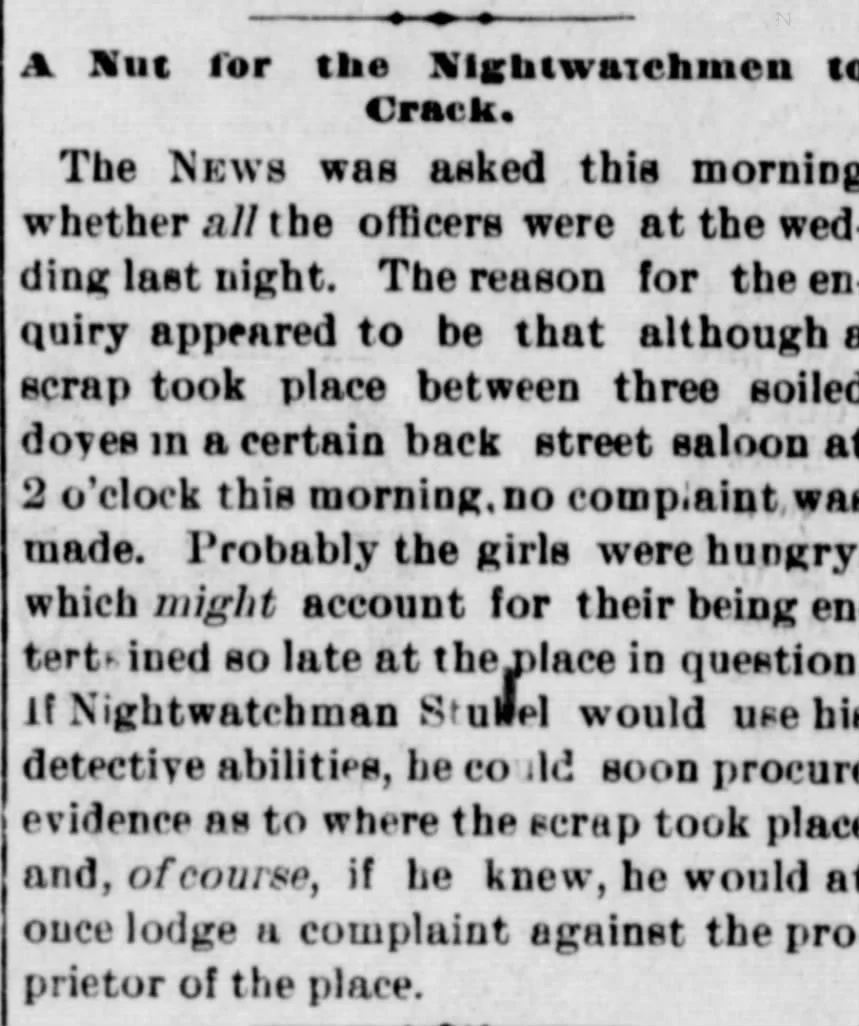
“A Nut for the Nightwatchmen to Crack.
The News was asked this morning whether all the officers were at the wedding last night. The reason for the enquiry appeared to be that although a scrap took place between three soiled doves in a certain back street saloon at 2 o’clock this morning, no complaint was made. Probably the girls were hungry which might account for their being entertained so late at the place in question. If Nightwatchman Stukel would use his detective abilities, he could soon procure evidence as to where the scrap took place, and, of course, if he knew, he would at once lodge a complaint against the proprietor of the place.”
In the winter of 1898, officers that were supposed to be on-duty one evening chose to instead attend a local wedding. Late that night, a fight broke out amongst sex workers (and assumedly Johns) at a saloon. Despite the scuffle, there was no record of the police responding or noting the incident. This article suggests the incident was widely known, but went unreported on by officers.
February 8, 1897, (pg. 8) “The Calumet News”
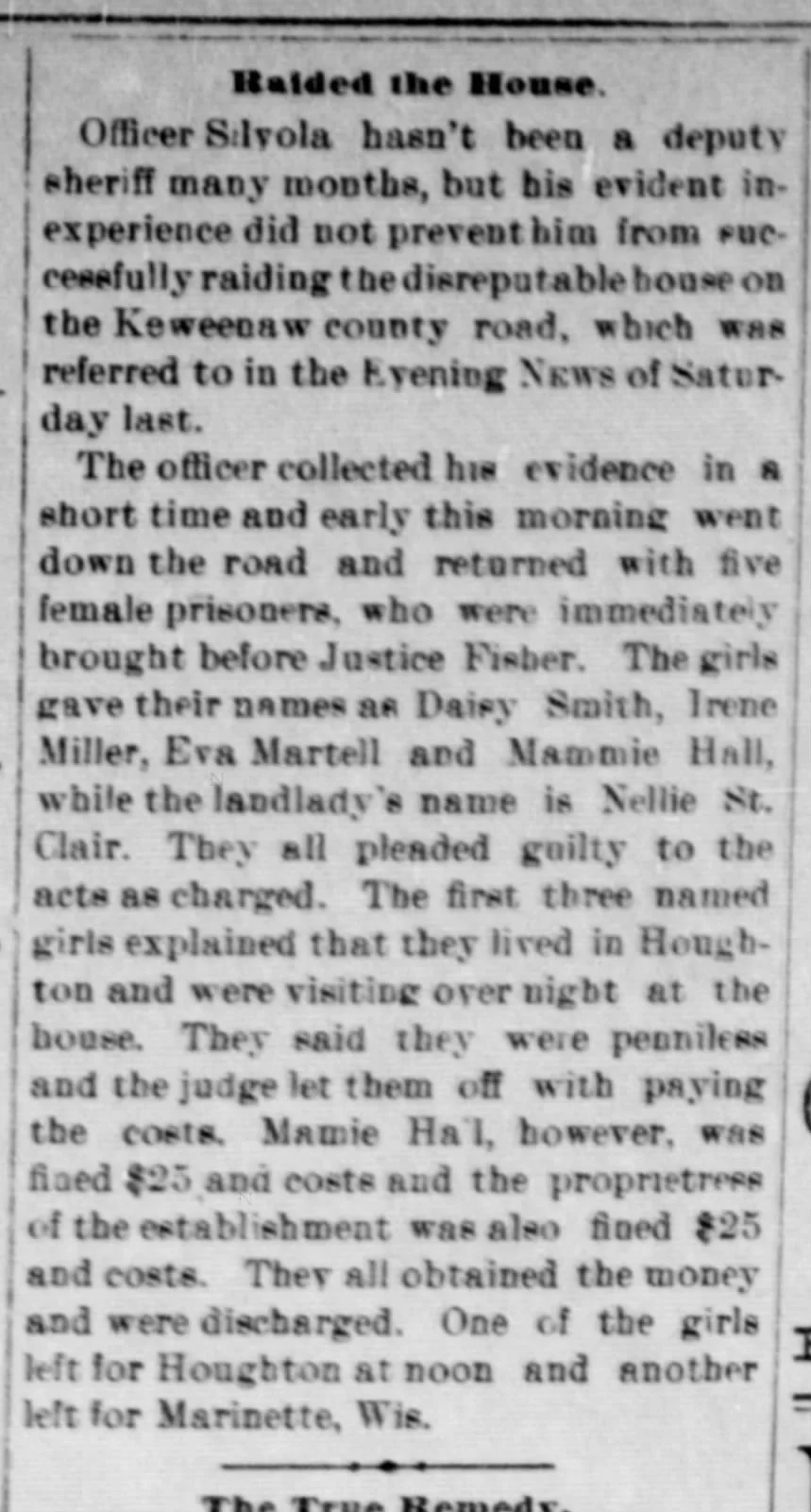
“Raided the House.
Officer Slyola hasn’t been a deputy sheriff many months, but his evident inexperience did not prevent him from successfully raiding the disreputable house on the Keweenaw county road, which was referred to in the Evening News of Saturday last.
The officer collected his evidence in a short time and early this morning went down the road and returned with five female prisoners, who were immediately brought before Justice Fisher. The girls gave their names as Daisy Smith, Irene Miller, Eva Martell and Mammie Hall, while the landlady’s name is Nellie St. Clair. They all pleaded guilty to the acts as charged. The first three named girls explained that they lived in Houghton and were visiting over night at the house. They said they were penniless and the judge let them off with paying the costs. Mamie Hall, however, was fined $25 and costs and the proprietress of the establishment was also fined $25 and costs. They all obtained the money and were discharged. One of the girls left for Houghton at noon and another left for Marinette, Wis.”
May 8, 1897, (pg. 7) “The Calumet News”
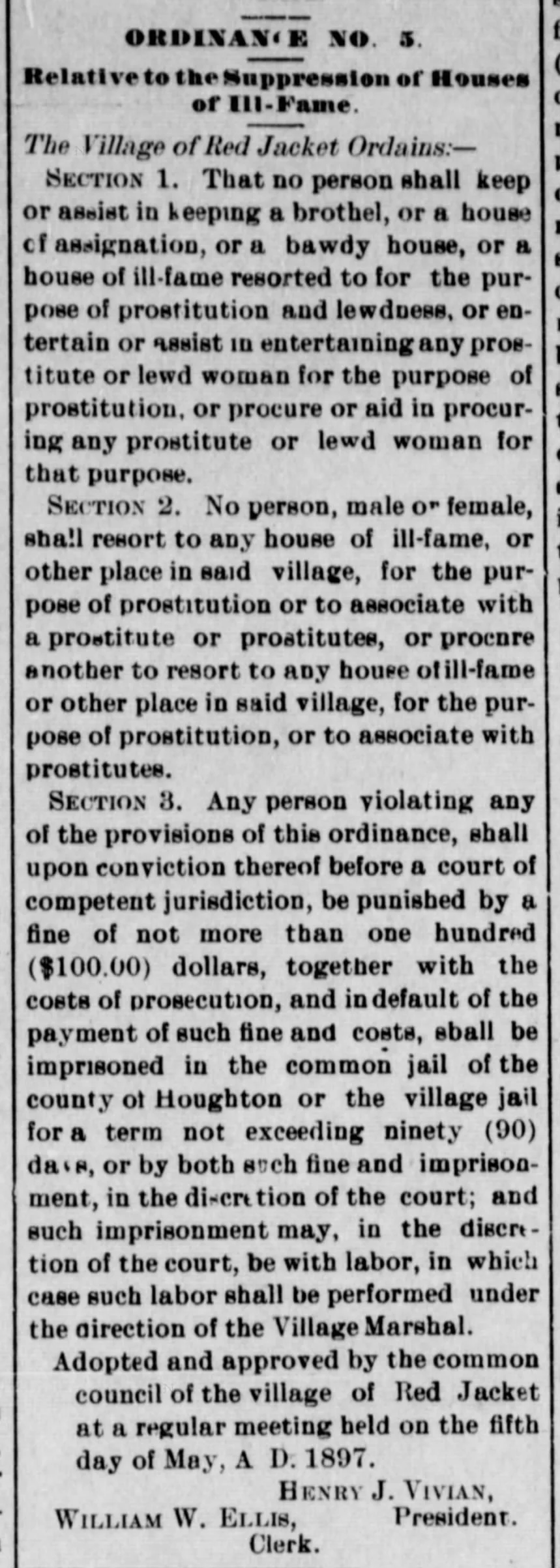
“ORDINANCE NO. 5.
Relative to the Suppression of Houses of Ill-Fame.
The Village of Red Jacket Ordains:—
SECTION 1. That no person shall keep or assist in keeping a brothel, or a house of assignation, or a bawdy house, or a house of ill-fame resorted to for the purpose of prostitution and lewdness, or entertain or assist in entertaining any prostitute or lewd woman for the purpose of prostitution, or procure or aid in procuring any prostitute or lewd woman for that purpose.
SECTION 2. No person, male or female, shall resort to any house of ill-fame, or other place in said village, for the purpose of prostitution or to associate with a prostitute or prostitutes, or procure another to resort to any house of ill-fame or other place in said village, for the purpose of prostitution, or to associate with prostitutes.
SECTION 3. Any person violating any of the provisions of this ordinance, shall upon conviction thereof before a court of competent jurisdiction, be punished by a fine of not more than one hundred ($100.00) dollars, together with the costs of prosecution, and in default of the payment of such fine and costs, shall be imprisoned in the common jail of the county of Houghton or the village jail for a term not exceeding ninety (90) days, or by both such fine and imprisonment, in the discretion of the court; and such imprisonment may, in the discretion of the court, be with labor, in which case such labor shall be performed under the direction of the Village Marshal.
Adopted and approved by the common council of the village of Red Jacket at a regular meeting held on the fifth day of May, A. D. 1897.
HENRY J. VIVIAN,
President.
WILLIAM W. ELLIS,
Clerk.”
Ordinances like this one in Red Jacket (Calumet) was how towns formally attempted to regulate prostitution, often clarifying what was already being enforced unevenly through arrests and fines.
May 20, 1897, (pg. 3)“The Calumet News”
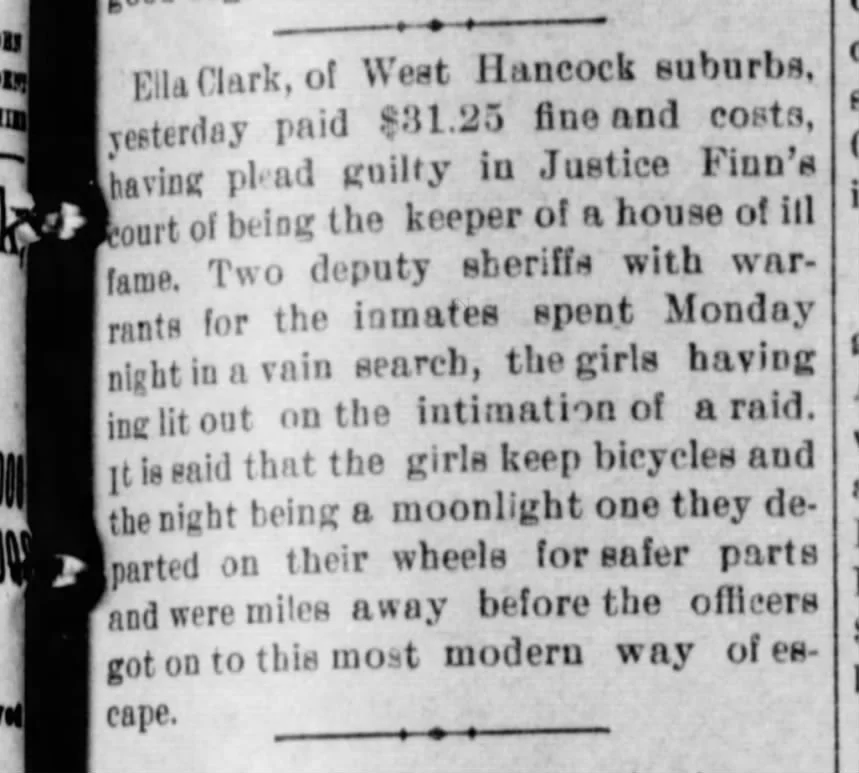
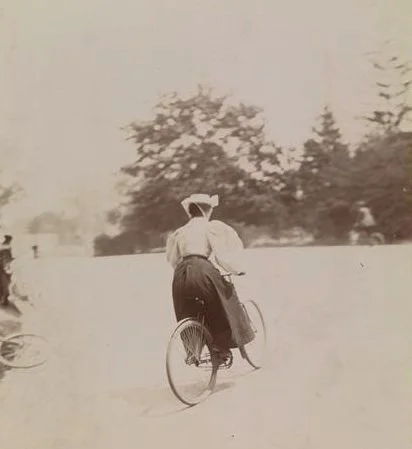
“Ella Clark, of West Hancock suburbs, yesterday paid $31.25 fine and costs, having plead guilty in Justice Finn’s court of being the keeper of a house of ill fame. Two deputy sheriffs with warrants for the inmates spent Monday night in a vain search, the girls having lit out on the intimation of a raid. It is said that the girls keep bicycles and the night being a moonlight one they departed on their wheels for safer parts and were miles away before the officers got on to this most modern way of escape.”
In 1897, the police attempted a raid on a home in West Hancock, which would have been anything west of Scott Street (near where the Finlandia campus is today). However, the women had received a tip and fled on bicycles, which had just become common. A few years later, on the 1900 census, Ella Clark is a resident of Railroad Avenue (now South Lincoln Drive). The street is part of the main drag of Hancock and full of three-bedroom homes, but 20-year-old Ella Clark was apparently a “farmer” who lived alone.

October 19, 1897, (pg. 8)“The Calumet News”
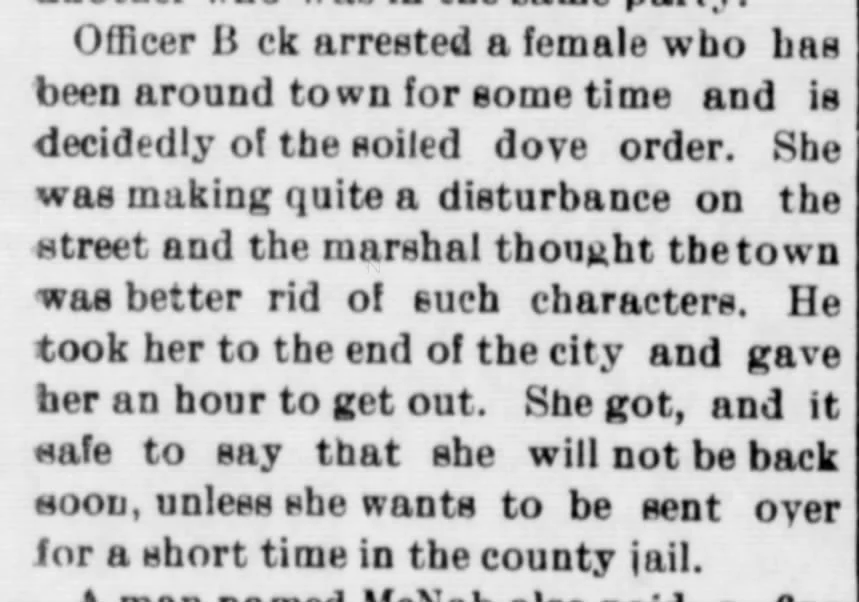
“Officer Beck arrested a female who has been around town for some time and is decidedly of the soiled dove order. She was making quite a disturbance on the street and the marshal thought the town was better rid of such characters. He took her to the end of the city and gave her an hour to get out. She got, and it is safe to say that she will not be back soon, unless she wants to be sent over for a short time in the county jail.”
Nov 24, 1897, (pg. 8)“The Calumet News”
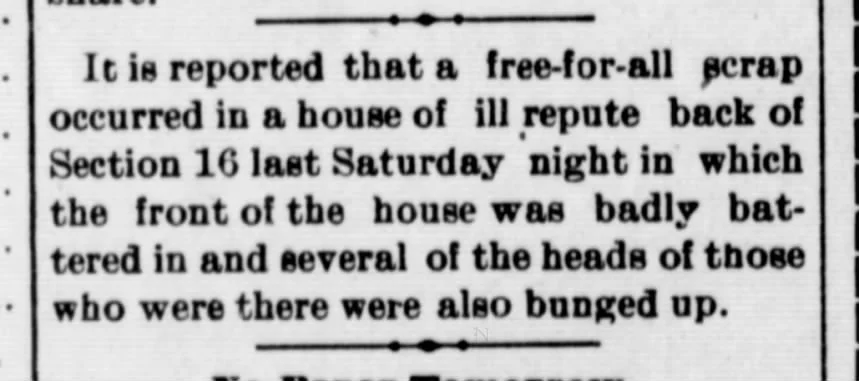
“It is reported that a free-for-all scrap occurred in a house of ill repute back of Section 16 last Saturday night in which the front of the house was badly battered in and several of the heads of those who were there were also bunged up.”
November 30, 1897, (pg. 4)“The Calumet News”
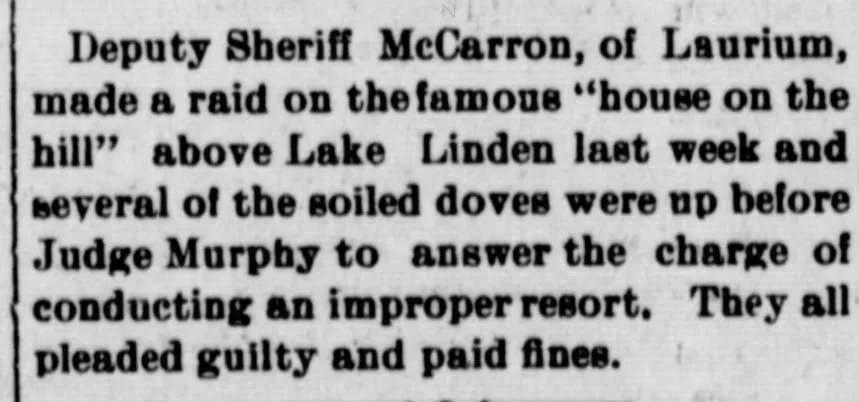
“Deputy Sheriff McCarron, of Laurium, made a raid on the famous “house on the hill” above Lake Linden last week and several of the soiled doves were up before Judge Murphy to answer the charge of conducting an improper resort. They all pleaded guilty and paid fines.”
December 9, 1897, (pg. 3)“The Calumet News”
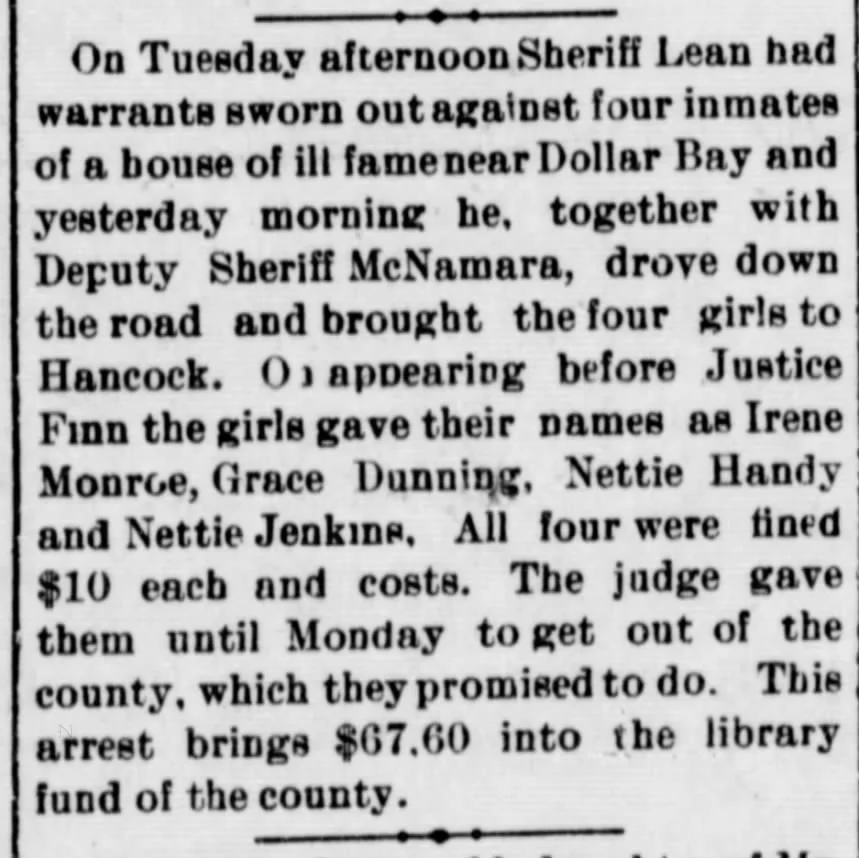
“On Tuesday afternoon Sheriff Lean had warrants sworn out against four inmates of a house of ill fame near Dollar Bay and yesterday morning he, together with Deputy Sheriff McNamara, drove down the road and brought the four girls to Hancock. On appearing before Justice Finn the girls gave their names as Irene Monroe, Grace Dunning, Nettie Handy and Nettie Jenkins. All four were fined $10 each and costs. The judge gave them until Monday to get out of the county, which they promised to do. This arrest brings $67.60 into the library fund of the county.”
December 1, 1897, (pg. 8)“The Calumet News”
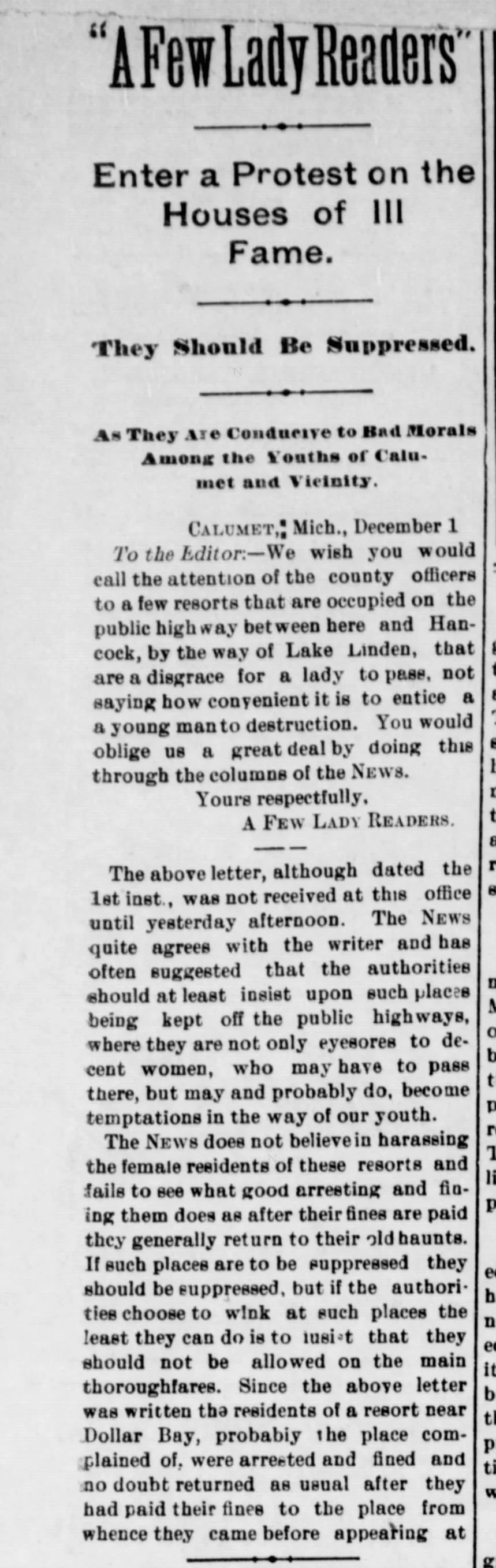
“A Few Lady Readers Enter a Protest on the Houses of Ill Fame.
They Should Be Suppressed.
As They Are Conducive to Bad Morals Among the Youths of Calumet and Vicinity.
To the Editor—We wish you would call the attention of the county officers to a few resorts that are occupied on the public highway between here and Hancock, by the way of Lake Linden, that are a disgrace for a lady to pass, not saying how convenient it is to entice a young man to destruction. You would oblige us a great deal by doing this through the columns of the News.
Yours respectfully,
A FEW LADY READERS.
The above letter, although dated the 1st inst., was not received at this office until yesterday afternoon. The News quite agrees with the writer and has often suggested that the authorities should at least insist upon such places being kept off the public highways, where they are not only eyesores to decent women, who may have to pass there, but may and probably do, become temptations in the way of our youth.
The News does not believe in harassing the female residents of these resorts and fails to see what good arresting and fining them does as after their fines are paid they generally return to their old haunts. If such places are to be suppressed they should be suppressed, but if the authorities choose to wink at such places the least they can do is to insist that they should not be allowed on the main thoroughfares. Since the above letter was written the residents of a resort near Dollar Bay, probably the place complained of, were arrested and fined and no doubt returned as usual after they had paid their fines to the place from whence they came before appearing at-”
(the rest of the article was unavailable)
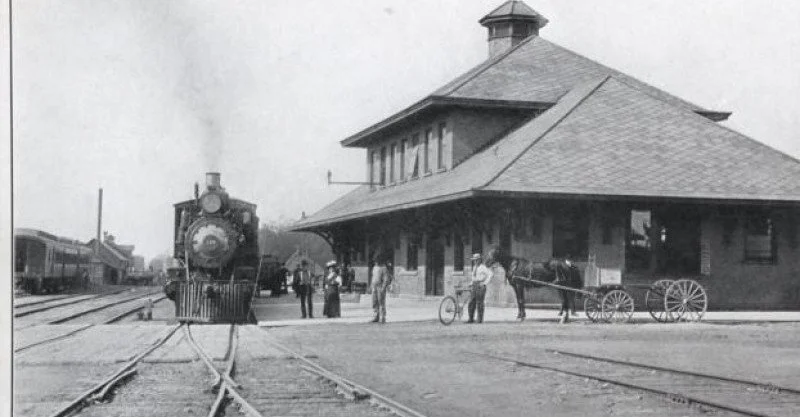
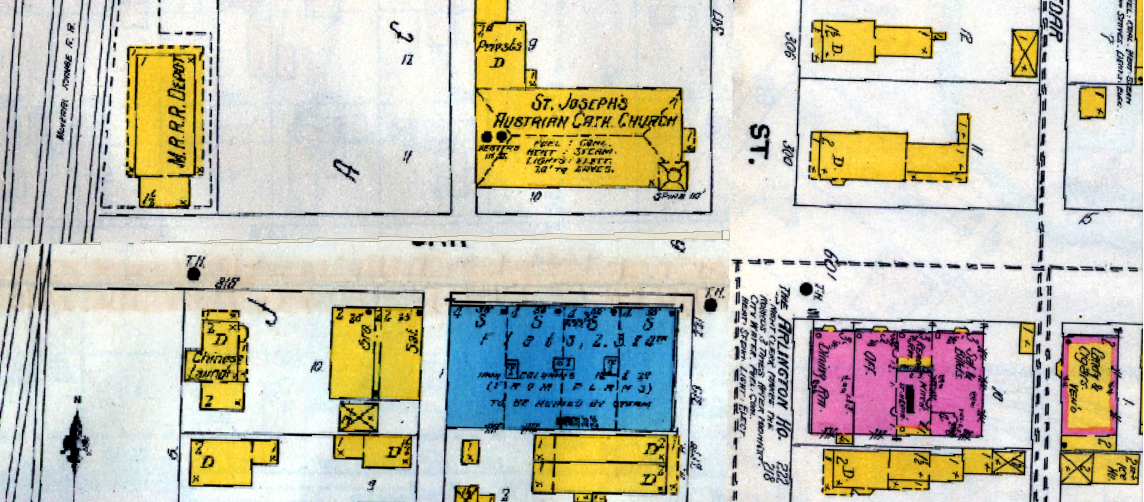
The area of Calumet surrounding the railroad depot was the apparent hot spot for brothels. Men came off the trains for work (or from work) and could find ladies waiting for him in a home, hotel, or room attached to a saloon nearby. The top photo shows the depot around 1900; the bottom is the Sanborn map of the area from 1900. The depot is in the top left corner, across the street are homes and a saloon, and down the road is a hotel.
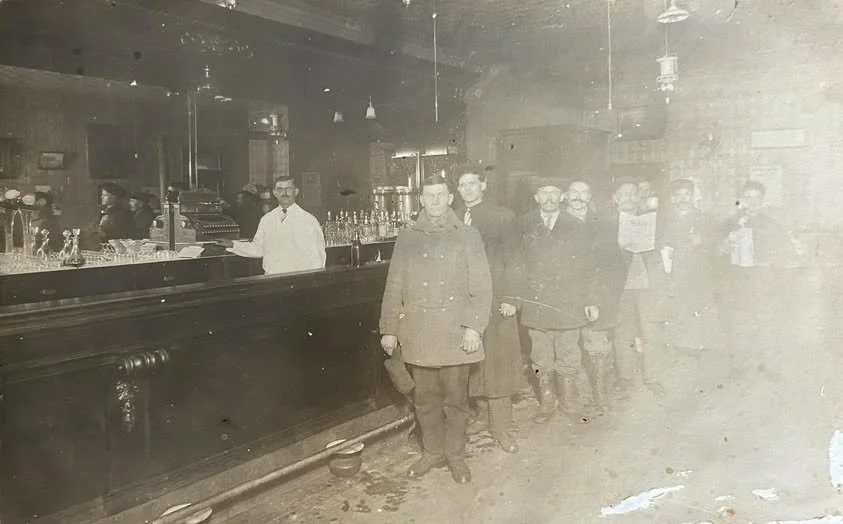
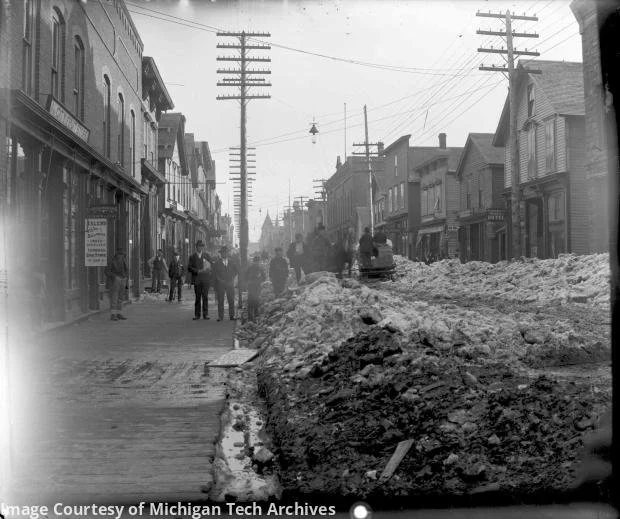
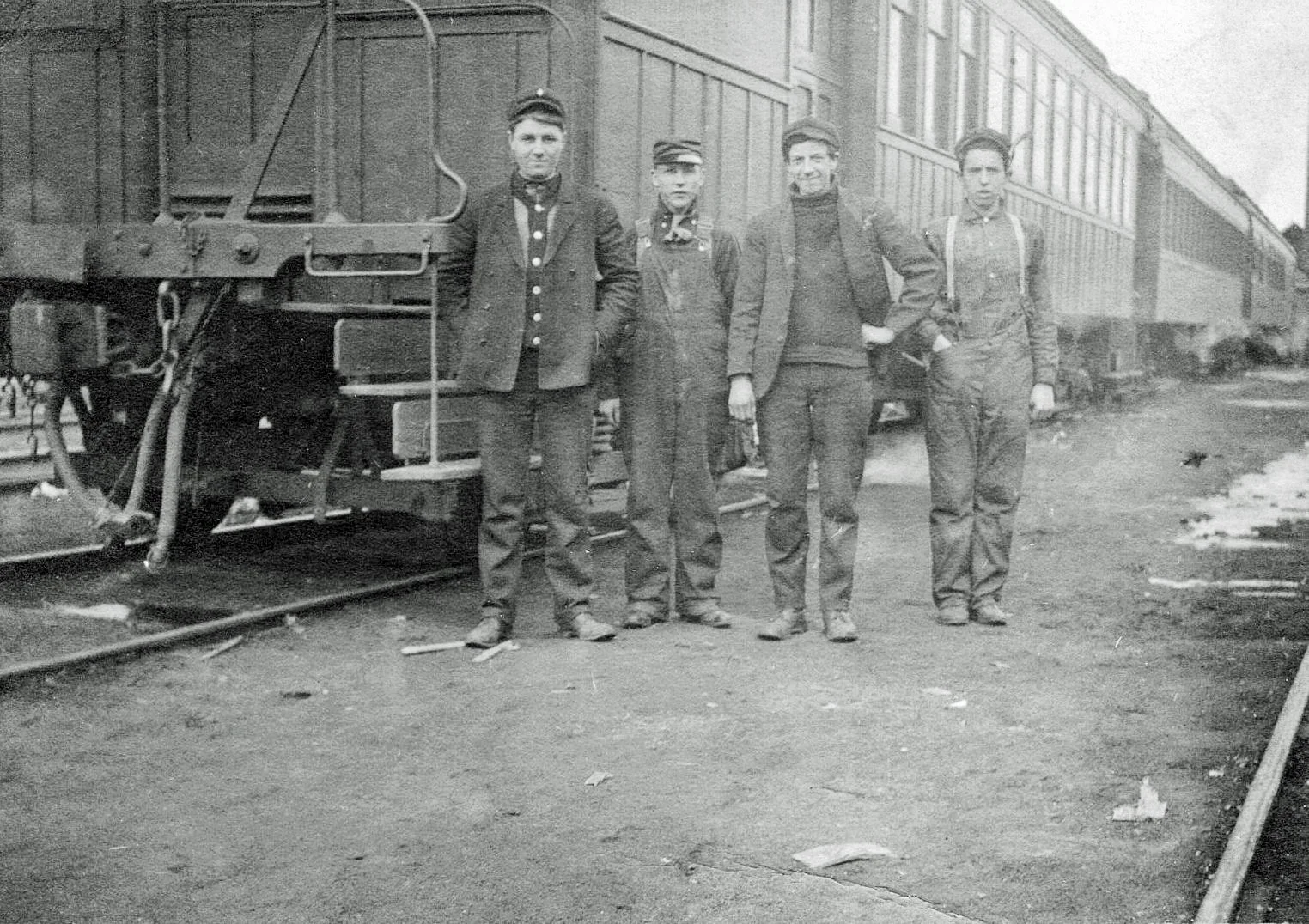
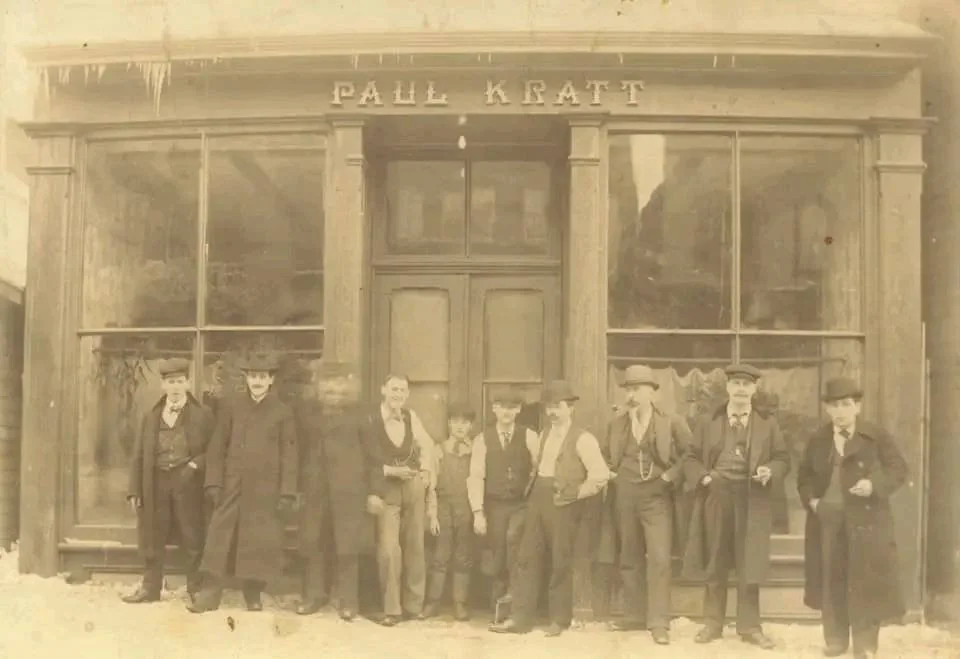
Calumet was a rough town full of bachelors working in local industries. These photos, from Michigan Tech Archives, show some scenes of Calumet around 1900.
January 24, 1898, (pg. 3)“The Calumet News”
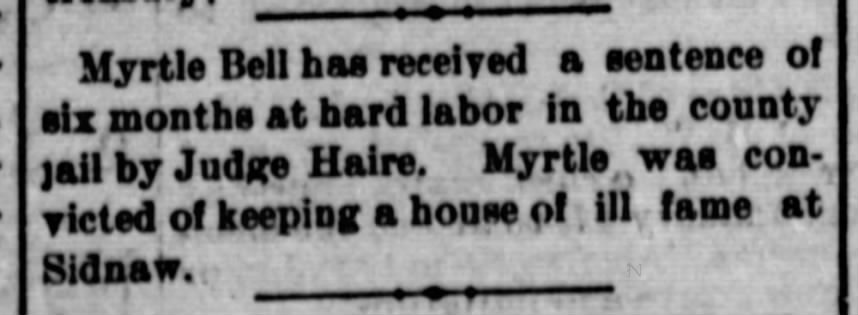
“Myrtle Bell has received a sentence of six months at hard labor in the county jail by Judge Haire. Myrtle was convicted of keeping a house of ill fame at Sidnaw.”
February 15, 1898, (pg. 8) “The Calumet News”
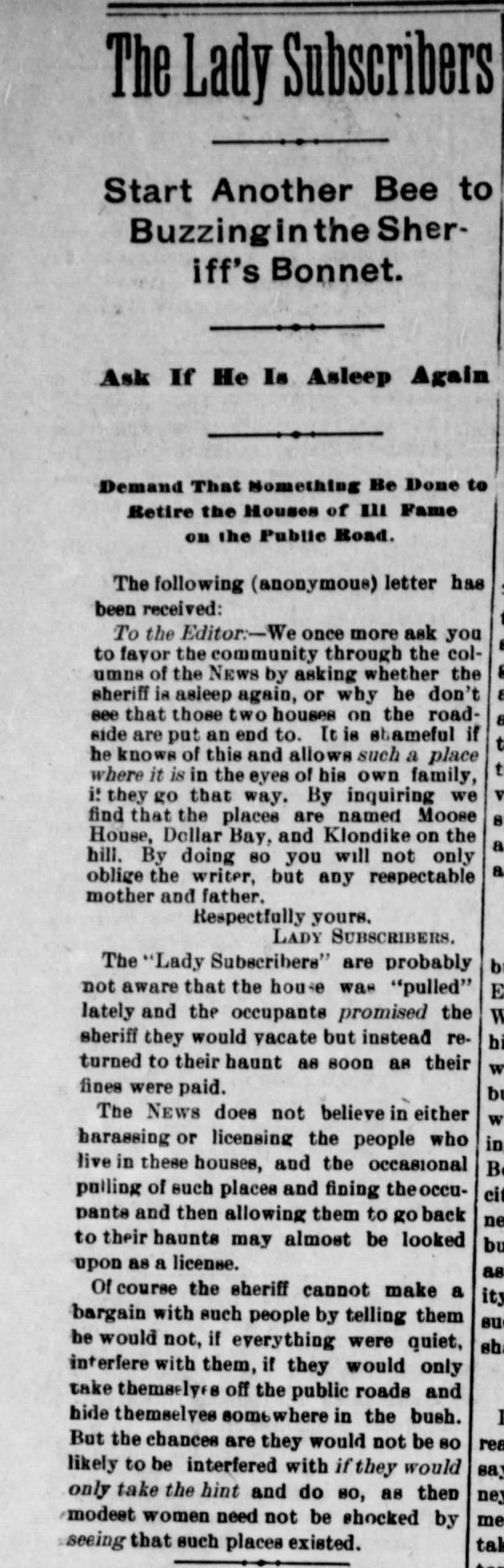
“The Lady Subscribers Start Another Bee to Buzzing in the Sheriff’s Bonnet.
Ask If He Is Asleep Again.
Demand That Something Be Done to Retire the Houses of Ill Fame on the Public Road.
The following (anonymous) letter has been received:
To the Editor—We once more ask you to rouse the community through the columns of the News by asking whether the sheriff is asleep again, or why he don’t see that those two houses on the roadside are put an end to. It is shameful if he knows of this and allows such a place where it is in the eyes of his own family, if they go that way. By inquiring we find that the places are named Moose House, Dollar Bay, and Klondike on the hill. By doing so you will not only oblige the writer, but any respectable mother and father.
Respectfully yours,
LADY SUBSCRIBERS.
The ‘Lady Subscribers’ are probably not aware that the house was ‘pulled’ lately and the occupants promised the sheriff they would vacate but instead returned to their haunt as soon as their fines were paid.
The News does not believe in either harassing or licensing the people who live in these houses, and the occasional pulling of such places and fining the occupants and then allowing them to go back to their haunts may almost be looked upon as a license.
Of course the sheriff cannot make a bargain with such people by telling them he would not, if everything were quiet, interfere with them, if they would only take themselves off the public roads and hide themselves somewhere in the bush. But the chances are they would not be so likely to be interfered with if they would only take the hint and do so, as then modest women need not be shocked by seeing that such places existed.”
March 10, 1898, (pg. 3)“The Calumet News”
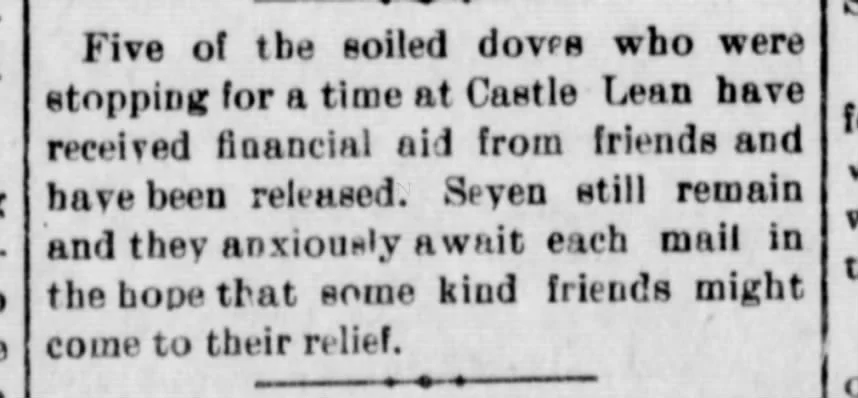
“Five of the soiled doves who were stopping for a time at Castle Lean have received financial aid from friends and have been released. Seven still remain and they anxiously await each mail in the hope that some kind friends might come to their relief.”
March 28, 1898, (pg. 3)“The Calumet News”
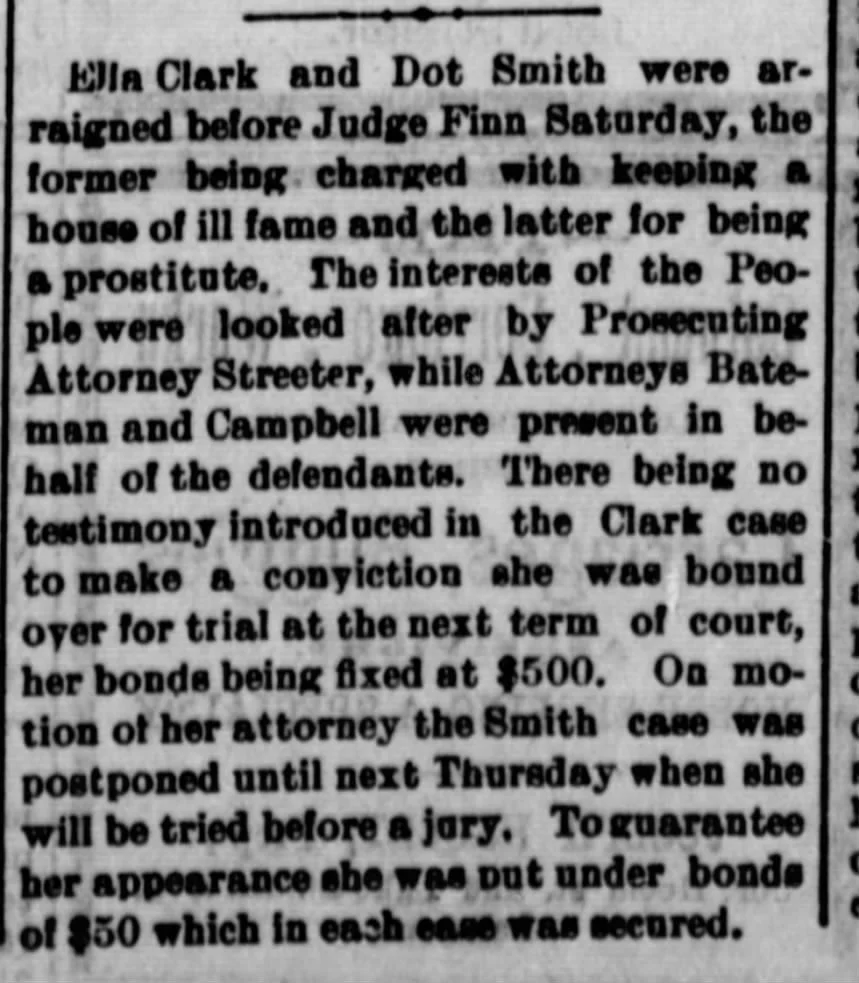
“Ella Clark and Dot Smith were arraigned before Judge Finn Saturday, the former being charged with keeping a house of ill fame and the latter for being a prostitute. The interests of the People were looked after by Prosecuting Attorney Streeter, while Attorneys Bateman and Campbell were present in behalf of the defendants. There being no testimony introduced in the Clark case to make a conviction she was bound over for trial at the next term of court, her bonds being fixed at $500. On motion of her attorney the Smith case was postponed until next Thursday when she will be tried before a jury. To guarantee her appearance she was put under bonds of $50 which in each case was secured.”
April 1, 1898, (pg. 3) “The Calumet News”
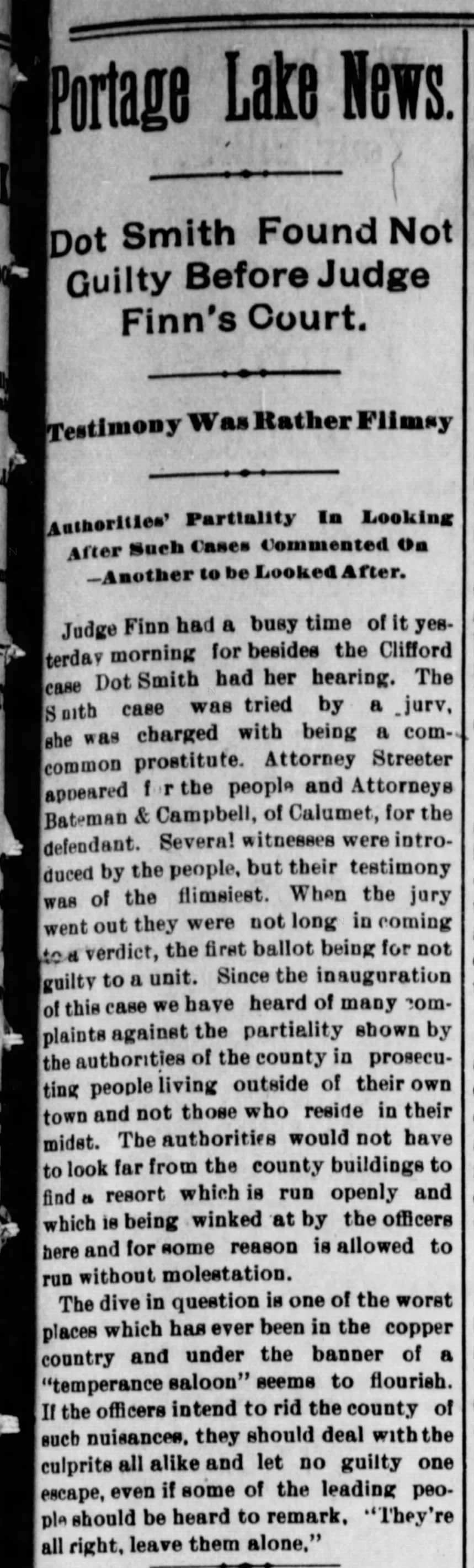
“Dot Smith Found Not Guilty Before Judge Finn’s Court.
Testimony Was Rather Flimsy.
Authorities’ Partiality in Looking After Such Cases Commented On—Another to be Looked After.
Judge Finn had a busy time of it yesterday morning for besides the Clifford case Dot Smith had her hearing. The Smith case was tried by a jury; she was charged with being a common prostitute. Attorney Streeter appeared for the people and Attorneys Bateman & Campbell, of Calumet, for the defendant. Several witnesses were introduced by the people, but their testimony was of the flimsiest. When the jury went out they were not long in coming to a verdict, the first ballot being for not guilty to a unit.
Since the inauguration of this case we have heard of many complaints against the partiality shown by the authorities of the county in prosecuting people living outside of their own town and not those who reside in their midst. The authorities would not have to look far from the county buildings to find a resort which is run openly and which is being winked at by the officers here and for some reason is allowed to run without molestation.
The dive in question is one of the worst places which has ever been in the copper country and under the banner of a ‘temperance saloon’ seems to flourish. If the officers intend to rid the county of such nuisances, they should deal with the culprits all alike and let no guilty one escape, even if some of the leading people should be heard to remark, ‘They’re all right, leave them alone.’"
May 5, 1898, (pg. 3)“The Calumet News”
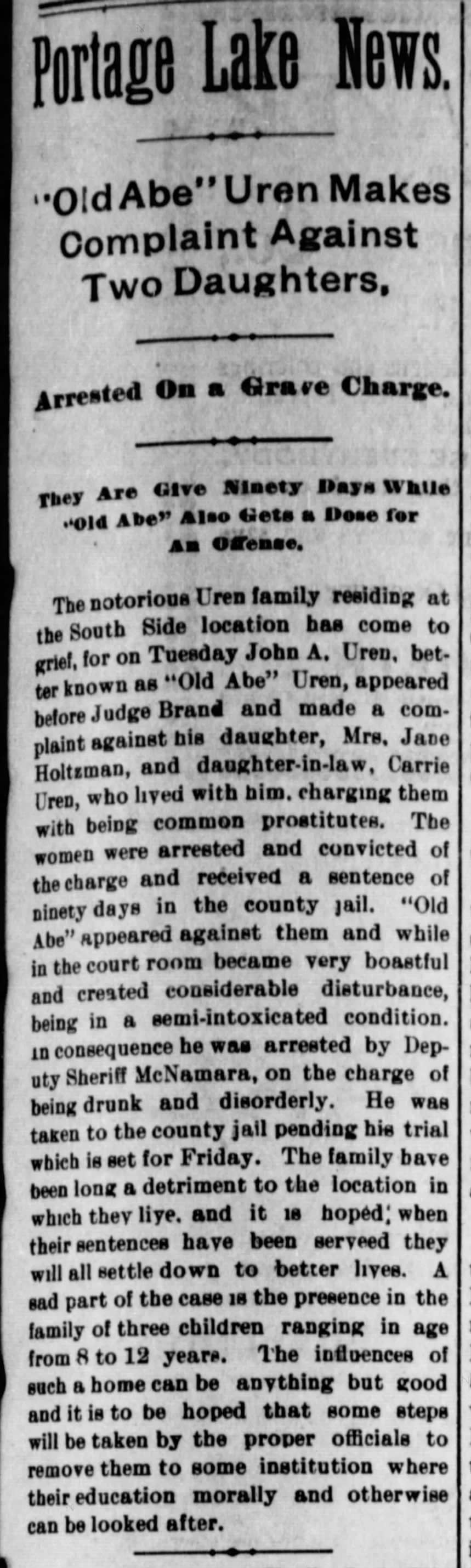
“‘Old Abe’ Uren Makes Complaint Against Two Daughters.
Arrested On a Grave Charge.
They Are Give Ninety Days While ‘Old Abe’ Also Gets a Dose for An Offense.
The notorious Uren family residing at the South Side location has come to grief, for on Tuesday John A. Uren, better known as ‘Old Abe’ Uren, appeared before Judge Brand and made a complaint against his daughter, Mrs. Jane Holtzman, and daughter-in-law, Carrie Uren, who lived with him, charging them with being common prostitutes. The women were arrested and convicted of the charge and received a sentence of ninety days in the county jail. ‘Old Abe’ appeared against them and while in the court room became very boastful and created considerable disturbance, being in a semi-intoxicated condition. In consequence he was arrested by Deputy Sheriff McNamara, on the charge of being drunk and disorderly. He was taken to the county jail pending his trial which is set for Friday. The family have been long a detriment to the location in which they live, and it is hoped, when their sentences have been served they will all settle down to better lives. A sad part of the case is the presence in the family of three children ranging in age from 8 to 12 years. The influences of such a home can be anything but good and it is to be hoped that some steps will be taken by the proper officials to remove them to some institution where their education morally and otherwise can be looked after.”
July 29, 1898, (pg. 5)“The Calumet News”
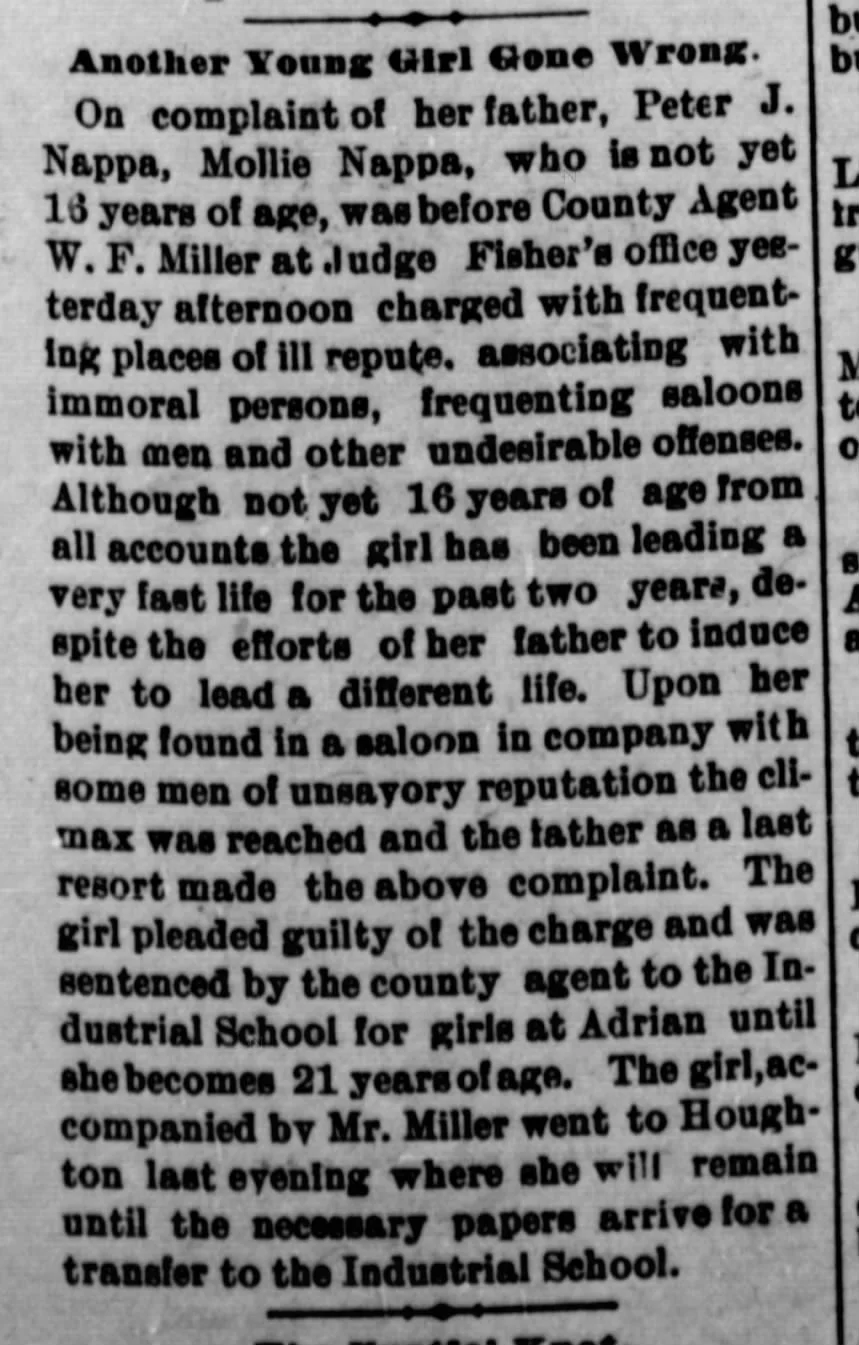
“Another Young Girl Gone Wrong.
On complaint of her father, Peter J. Nappa, Mollie Nappa, who is not yet 16 years of age, was before County Agent W. F. Miller at Judge Fisher’s office yesterday afternoon charged with frequenting places of ill repute, associating with immoral persons, frequenting saloons with men and other undesirable offenses. Although not yet 16 years of age from all accounts the girl has been leading a very fast life for the past two years, despite the efforts of her father to induce her to lead a different life. Upon her being found in a saloon in company with some men of unsavory reputation the climax was reached and the father as a last resort made the above complaint. The girl pleaded guilty of the charge and was sentenced by the county agent to the Industrial School for girls at Adrian until she becomes 21 years of age. The girl, accompanied by Mr. Miller went to Houghton last evening where she will remain until the necessary papers arrive for a transfer to the Industrial School.”
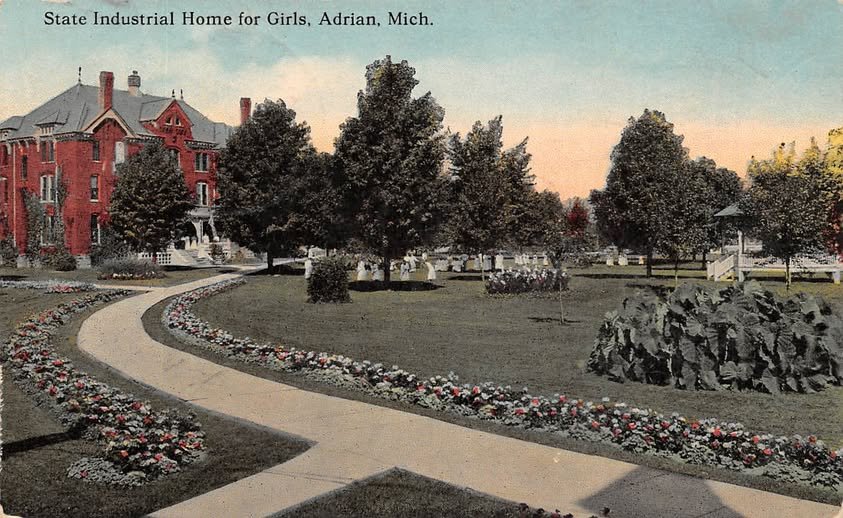
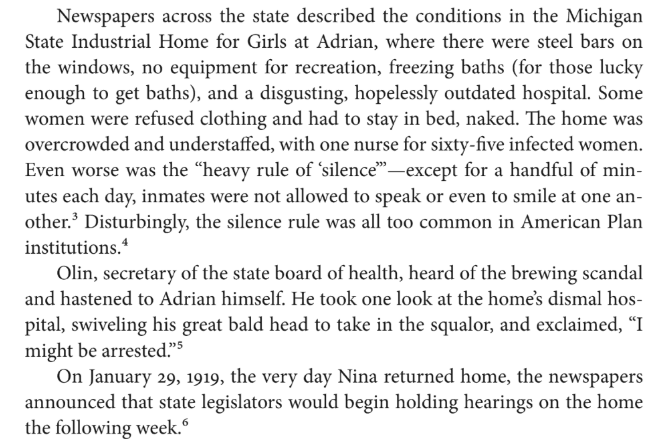
Some women were turned into authorities when they were suspected of being sex workers. Two different fathers in the examples above turned over their own daughters to authorities, who took them into custody on the man’s word. The women were give large sentences of 90 days in the first case, and five years in a state school for the second case. Unfortunately, incarceration was grim for women, even in a state-run “school,” as seen in this excerpt from The Trials of Nina McCall by Scott W. Stern:
July 9, 1903, unknown publication
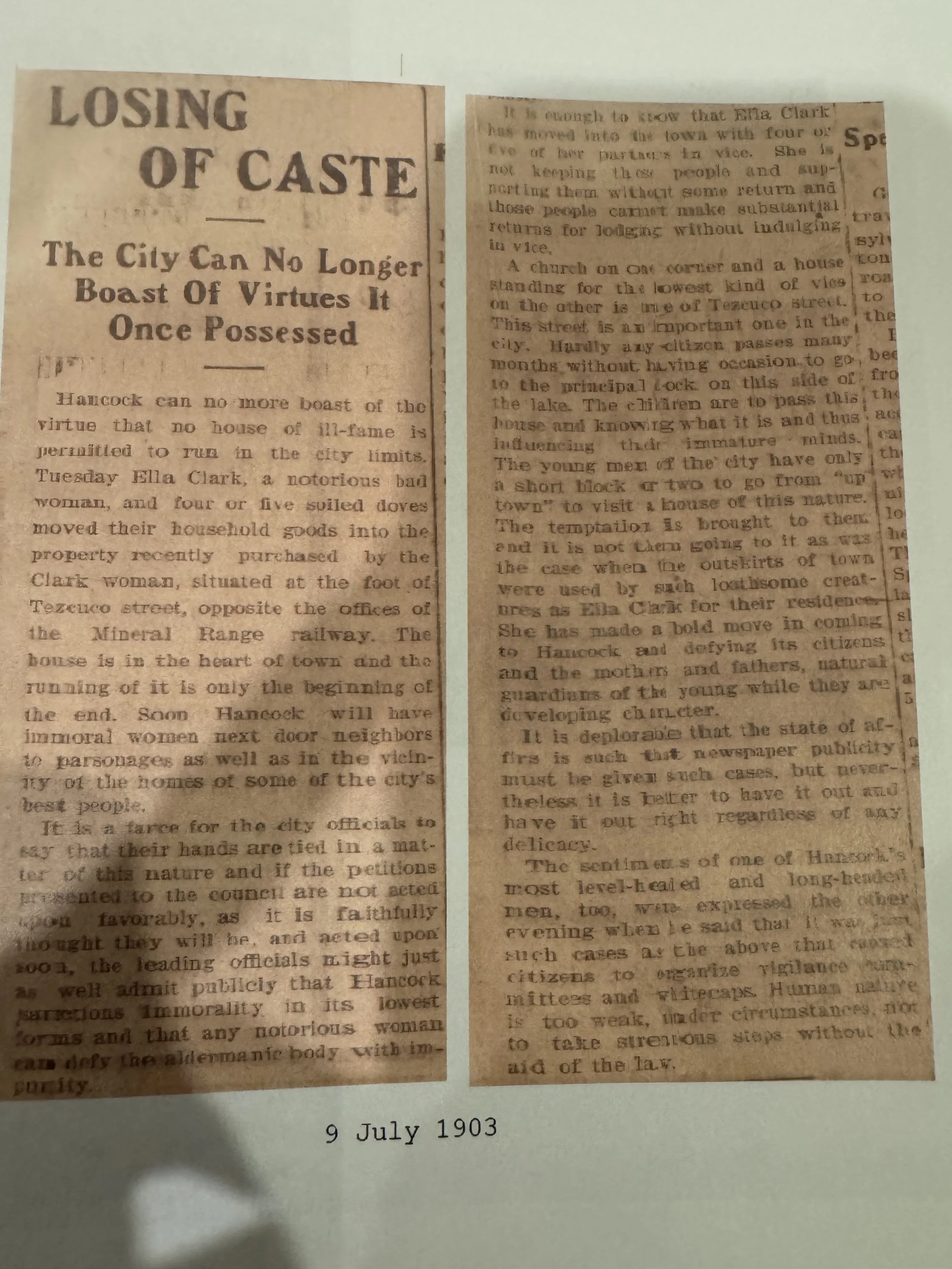
“LOSING OF CASTE
The City Can No Longer Boast Of Virtues It Once Possessed
Hancock can no more boast of the virtue that no house of ill-fame is permitted to run in the city limits. Tuesday Ella Clark, a notorious bad woman, and four or five soiled doves moved their household goods into the property recently purchased by the Clark woman, situated at the foot of Tezcuco street, opposite the offices of the Mineral Range railway. The house is in the heart of town and the running of it is only the beginning of the end. Soon Hancock will have immoral women next door neighbors to parsonages as well as in the vicinity of the homes of some of the city’s best people.
It is a farce for the city officials to say that their hands are tied in a matter of this nature and if the petitions presented to the council are not acted upon favorably, as it is faithfully thought they will be, and acted upon soon, the leading officials might just as well admit publicly that Hancock sanctions immorality in its lowest forms and that any notorious woman can defy the aldermanic body with impunity.
It is enough to know that Ella Clark has moved into the town with four or five of her partners in vice. She is not keeping these people and supporting them without some return and those people cannot make substantial returns for lodgings without indulging in vice.
A church on one corner and a house standing for the lowest kind of vice on the other is one of Tezcuco street. This street is an important one in the city. Hardly any citizen passes many months without having occasion to go to the principal dock on this side of the lake. The children are to pass this house and knowing what it is and thus influencing their immature minds. The young men of the city have only a short block or two to go from “up town” to visit a house of this nature. The temptation is brought to them and it is not them going to it as was the case when the outskirts of town were used by such loathsome creatures as Ella Clark for their residence.
She has made a bold move in coming to Hancock and defying its citizens and the mothers and fathers, natural guardians of the young while they are developing character.
It is deplorable that the state of affairs is such that newspaper publicity must be given such cases, but nevertheless it is better to have it out and have it out right regardless of any delicacy.
The sentiments of one of Hancock’s most level-headed and long-headed men, too, were expressed the other evening when he said that if such cases as the above that arouse citizens to organize vigilance committees and whitecaps. Human nature is too weak, under circumstances, not to take strenuous steps without the aid of the law.”
Tezcuco Street, now mostly parking lots, was once a long street of buildings. It stretches from the water, where the docks once were (near Porvoo Park), and up the hill three blocks to Reservation Street. Around 1900, it contained many shops, service stores, and even a hotel. But, mainly, it was saloons. On the above 1888 Sanborn images there are twelve saloons on or near just the two blocks of Tezcuco around Quincy street. Obviously, this led to a rowdy environment and brothels were common, although usually “hidden in plain sight” and not advertised or spoken about openly.
These images show the top (left) and bottom (right) of one block of Tezcuco Street around 1900.
October 25, 1910, (pg. 3) “The Calumet News”
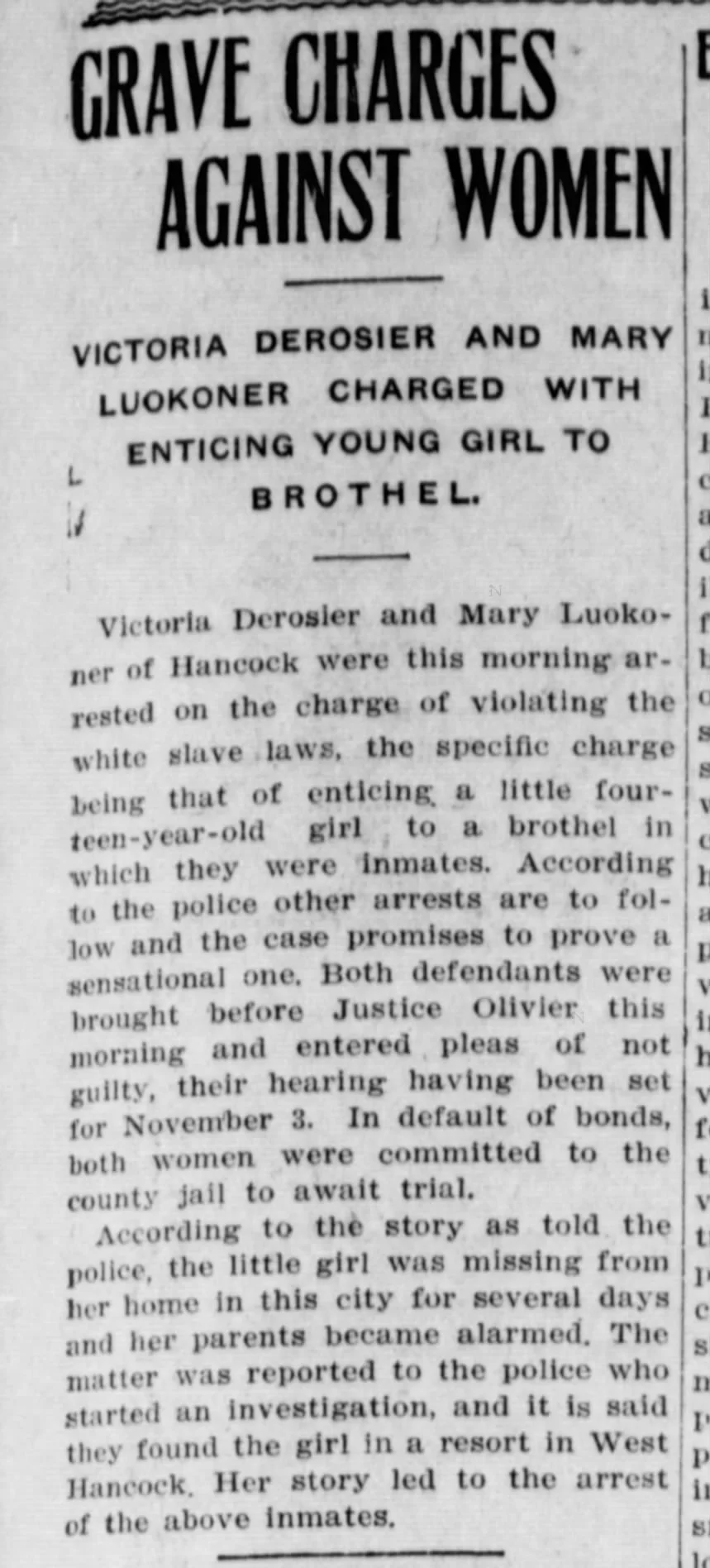
“GRAVE CHARGES AGAINST WOMEN
VICTORIA DEROSIER AND MARY LUOKONER CHARGED WITH ENTICING YOUNG GIRL TO BROTHEL.
Victoria Derosier and Mary Luokoner of Hancock were this morning arrested on the charge of violating the white slave laws, the specific charge being that of enticing a little fourteen-year-old girl to a brothel in which they were inmates. According to the police other arrests are to follow and the case promises to prove a sensational one. Both defendants were brought before Justice Olivier this morning and entered pleas of not guilty, their hearing having been set for November 3. In default of bonds, both women were committed to the county jail to await trial.
According to the story as told the police, the little girl was missing from her home in this city for several days and her parents became alarmed. The matter was reported to the police who started an investigation, and it is said they found the girl in a resort in West Hancock. Her story led to the arrest of the above inmates.”
November 1, 1910, (pg. 5) “The Calumet News”
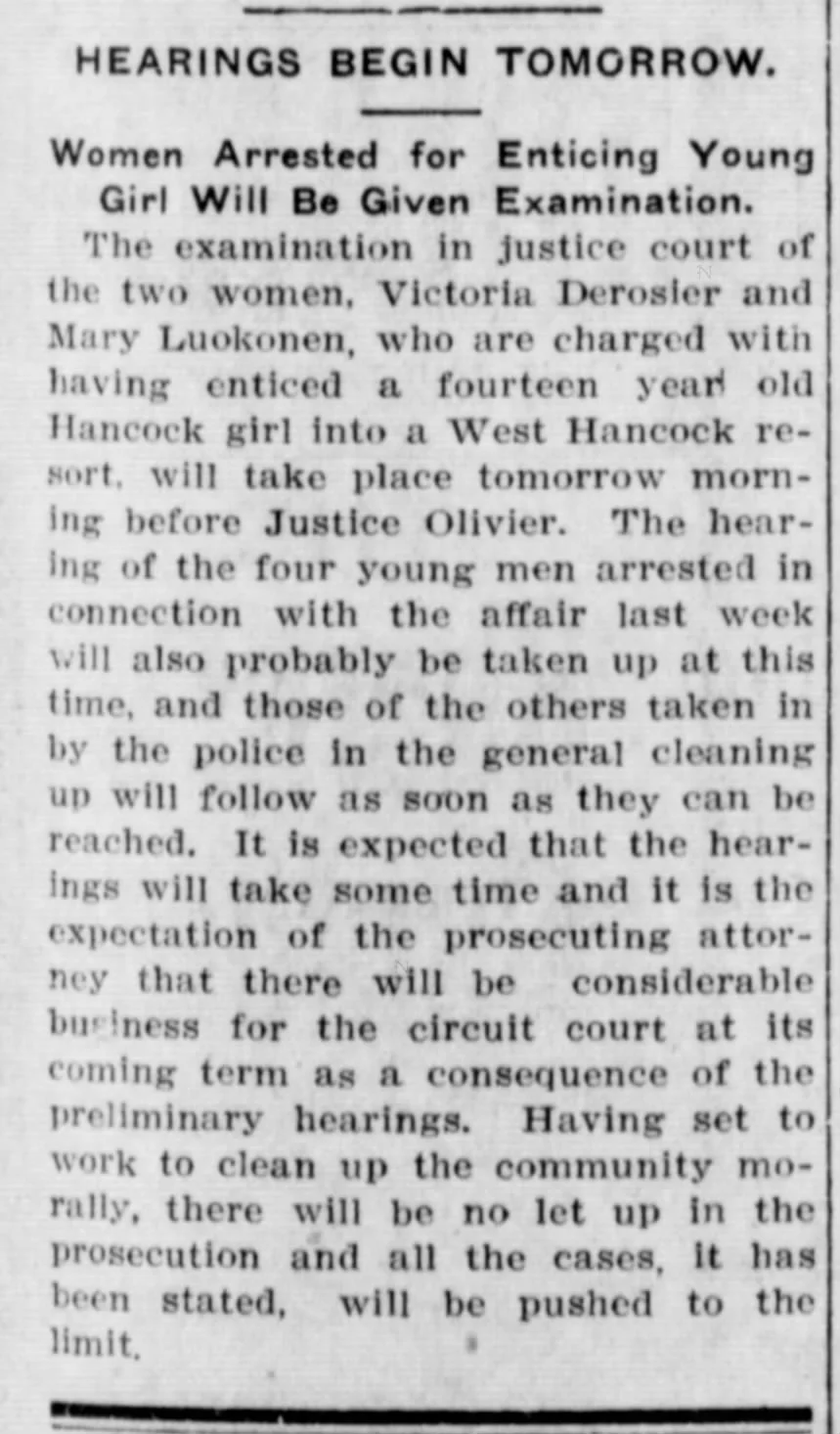
“HEARINGS BEGIN TOMORROW.
Women Arrested for Enticing Young
Girl Will Be Given Examination.
The examination in justice court of the two women, Victoria Derosier and Mary Luokonen, who are charged with having enticed a fourteen year old Hancock girl into a West Hancock resort, will take place tomorrow morning before Justice Olivier. The hearing of the four young men arrested in connection with the affair last week will also probably be taken up at this time, and those of the others taken in by the police in the general cleaning up will follow as soon as they can be reached. It is expected that the hearings will take some time and it is the expectation of the prosecuting attorney that there will be considerable business for the circuit court at its coming term as a consequence of the preliminary hearings. Having set to work to clean up the community morally, there will be no let up in the prosecution and all the cases, it has been stated, will be pushed to the limit.”
November 2, 1910, (pg. 3)“The Calumet News”
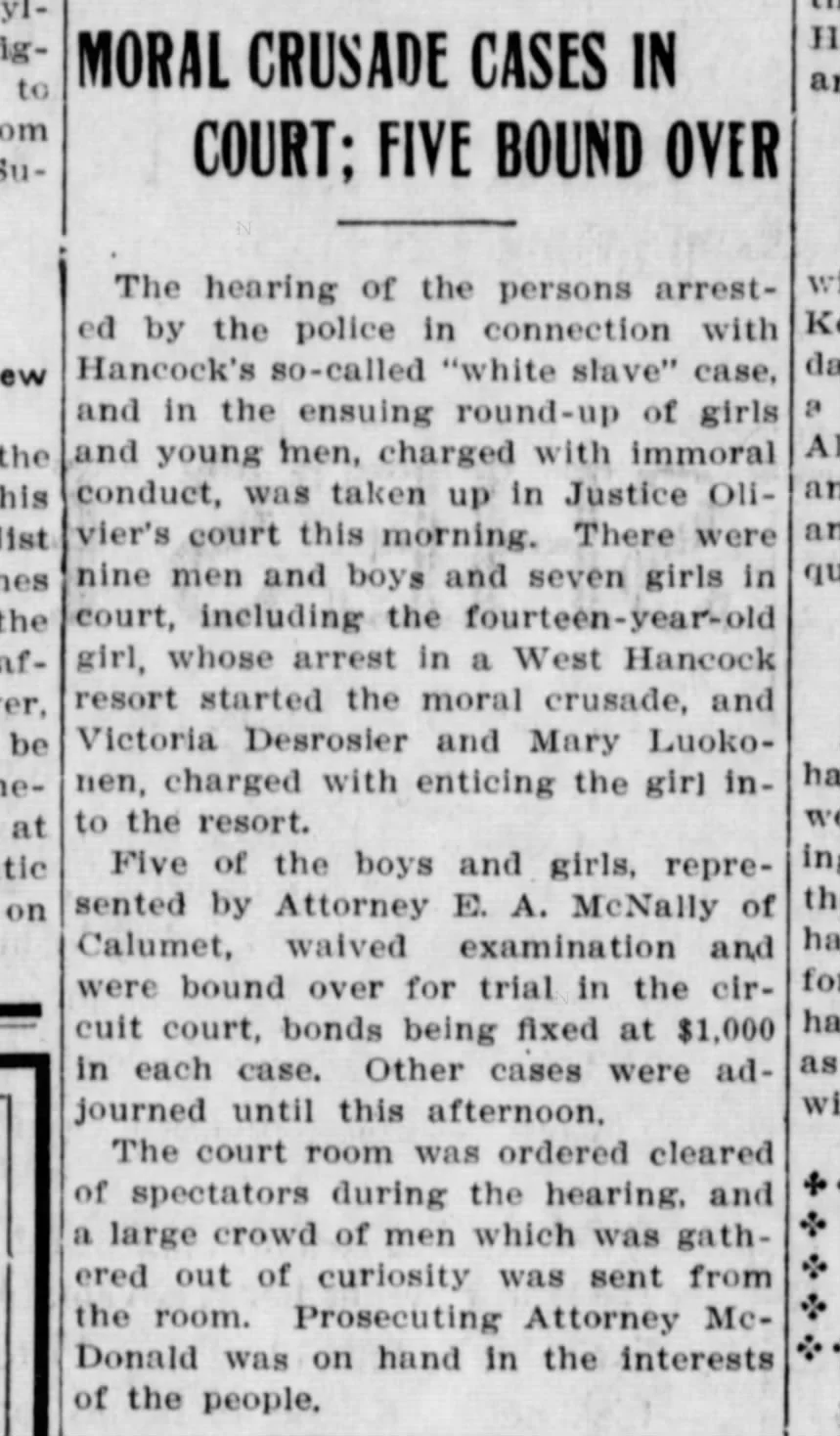
“MORAL CRUSADE CASES IN COURT; FIVE BOUND OVER”
The hearing of the persons arrested by the police in connection with Hancock’s so-called “white slave” case, and in the ensuing round-up of girls and young men, charged with immoral conduct, was taken up in Justice Olivier’s court this morning. There were nine men and boys and seven girls in court, including the fourteen-year-old girl, whose arrest in a West Hancock resort started the moral crusade, and Victoria Desrosier and Mary Luokonen, charged with enticing the girl into the resort.
Five of the boys and girls, represented by Attorney E. A. McNally of Calumet, waived examination and were bound over for trial in the circuit court, bonds being fixed at $1,000 in each case. Other cases were adjourned until this afternoon.
The court room was ordered cleared of spectators during the hearing, and a large crowd of men which was gathered out of curiosity was sent from the room. Prosecuting Attorney McDonald was on hand in the interests of the people.”

November 3, 1910, (pg. 3) “The Calumet News”
“AMAZING STORIES TOLD IN COURT
GIRLS RELATE SHOCKING DETAILS IN CONNECTION WITH WHITE SLAVE CASES.
ADJOURNMENT.
At the afternoon session of Justice Olivier’s court yesterday afternoon, two young girls of immature years told stories which were simply amazing in their disclosures of brazen immorality, and which were told unblushingly and even smilingly, so far as one of the girls was concerned.
The first girl on the stand, aged fourteen, was arrested in a raid made on a photograph gallery last week. She became tangled up in her answers, contradicting herself once or twice, and did not appear to realize the extent of her wrong doing.
The girl involved in the studio incident is Mary McConville, and the owner of the gallery, charged with a serious offense, is Peter M. Juntinen. It was in the Juntinen case that the girl testified and an adjournment was taken until Friday afternoon for the transcribing of the testimony.
The hearing of the case of two Hancock boys arrested in connection with the affair of the alleged fourteen year old girl who was taken from a West Hancock resort, was next taken up and the girl herself was placed on the stand as a witness. The girl’s name is Eva Mayotte, and the boys are Harry O’shinsky and Will Opie. The girl is of small stature and of slender build, with an interesting dark face, surmounted by thick black hair bound across her forehead with a red ribbon, giving her an oriental appearance. She appears to be of a fair degree of intelligence more so than the girl involved in the previous case, and she seemed disposed to make a clean breast of everything. She spoke calmly and emphatically, and told a story which shocked those in the court room. While her age is said to be but fourteen, she herself has stated it to be nineteen, and she told the court that she always understood, from her remembrances of past occurrences, that she was at least seventeen. Her story involved accounts of misdoings with several young men in back rooms of saloons in Hancock and Houghton, before she went to the West Hancock resort, and the details of her life there, since she first entered it about five weeks ago, were appalling when told by lips of one apparently so young and frail.
Virginia Desrosier, one of the women in whose company she had gone to the West Hancock resort, corroborated the story but said that she had tried to induce the girl to come away, believing her age to be less than nineteen and considering her too young to be engaged in such a business. The girl after a talk with the proprietors, who held out alluring promises to her, had decided to remain. The Desrosier woman denied enticing the girl to go to the place.
There were no persons allowed in the court room other than the court officials, police, witnesses, defendants, attorneys, County Agent Mason and newspaper representatives. The attorneys having interests in the case in behalf of defendants, or for the state were Prosecuting Attorney McDonald, Attorney W. A. Burritt and Barney Burritt of Hancock, Eugene A. McNally of Calumet, P. H. O’Brien of Calumet, John Kliskilo of Hancock, and Harry Corgan of Calumet.
After taking the testimony of the girl and Derosier woman an adjournment was taken until November 23.
The four young men bound over yesterday for hearing in circuit court, after waiving examination in the local justice court, on statutory charges of a serious nature are Matt Eskola, Octave Danellis, Leo Zerbal, William Latourelle and William Dumouthier. Each furnished bonds in the sum of $1,000 and was allowed to go. A girl arrested on a charge of enticing the McConville girl into Juntinen’s studio, was discharged from custody yesterday, the prosecutor finding no reason for holding her, but she was retained as a witness against the other girl.”
November 4, 1910 (pg. 3) “The Calumet News”
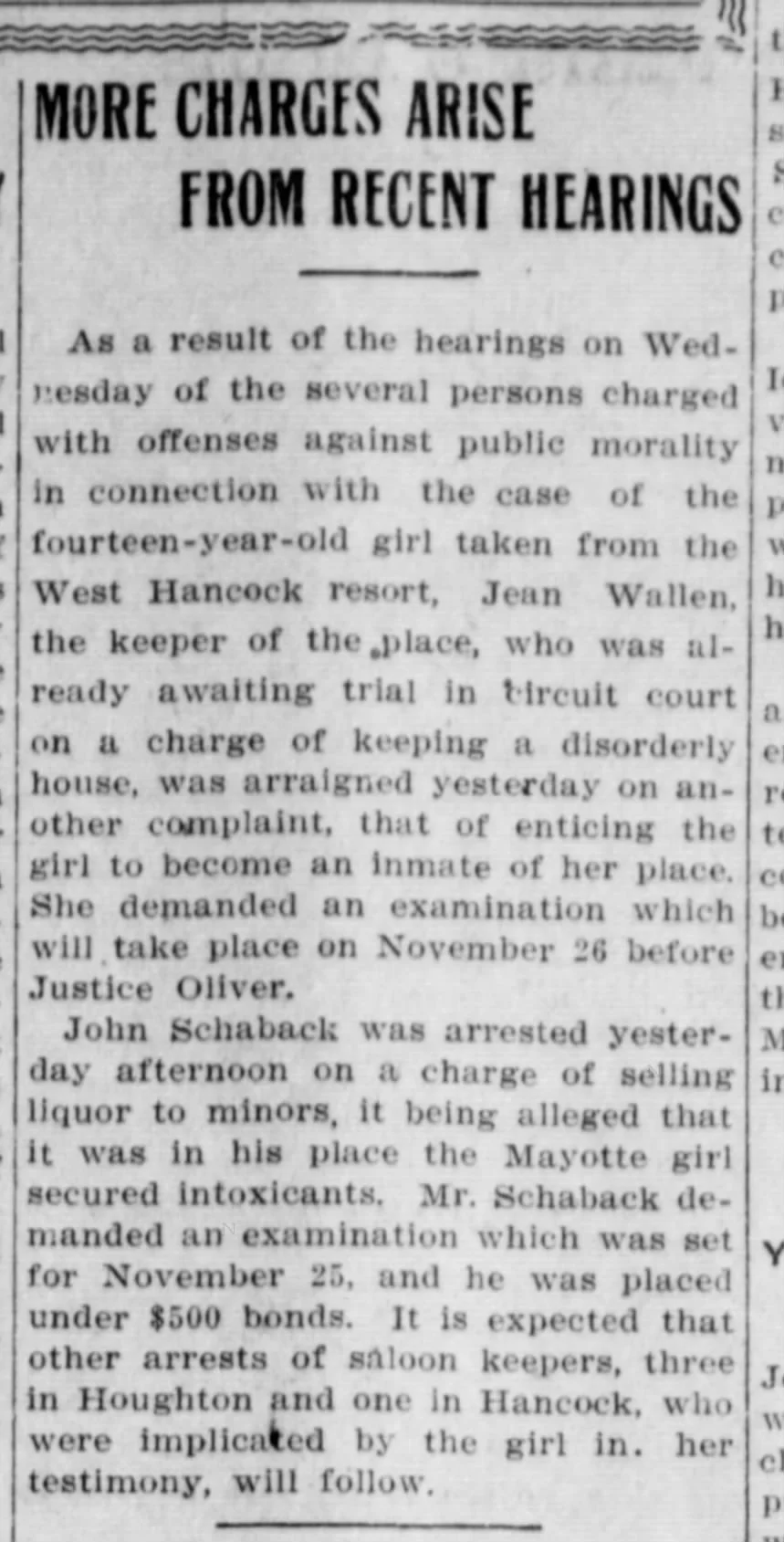
“MORE CHARGES ARISE FROM RECENT HEARINGS
As a result of the hearings on Wednesday of the several persons charged with offenses against public morality in connection with the case of the fourteen-year-old girl taken from the West Hancock resort, Jean Wallen, the keeper of the place, who was already awaiting trial in circuit court on a charge of keeping a disorderly house, was arraigned yesterday on another complaint, that of enticing the girl to become an inmate of her place. She demanded an examination which will take place on November 26 before Justice Oliver.
John Schaback was arrested yesterday afternoon on a charge of selling liquor to minors, it being alleged that it was in his place the Mayotte girl secured intoxicants. Mr. Schaback demanded an examination which was set for November 25, and he was placed under $500 bonds. It is expected that other arrests of saloon keepers, three in Houghton and one in Hancock, who were implicated by the girl in her testimony, will follow.”
November 22, 1910, (pg. 2) “The Calumet News”
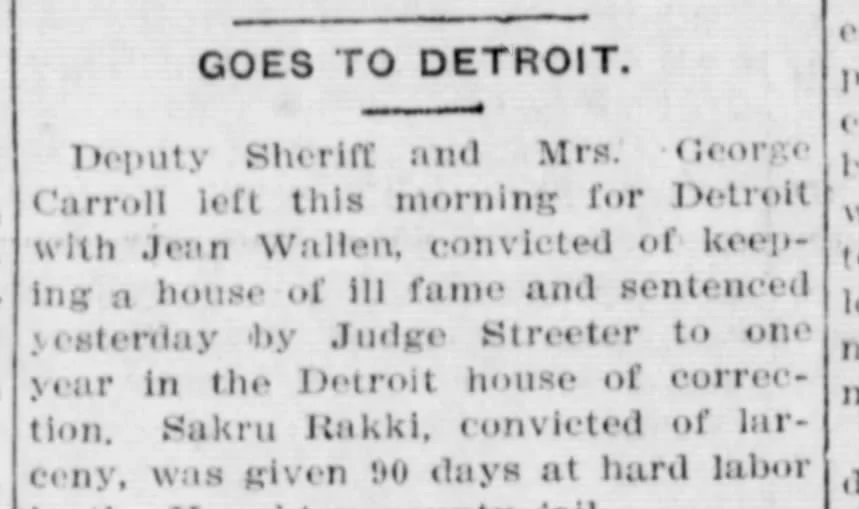
“Deputy Sheriff and Mrs. George Carroll left this morning for Detroit with Jean Wallen, convicted of keeping a house of ill fame and sentenced yesterday by Judge Streeter to one year in the Detroit house of correction.”
June 10, 1911, (pg. 2) “The Calumet News”
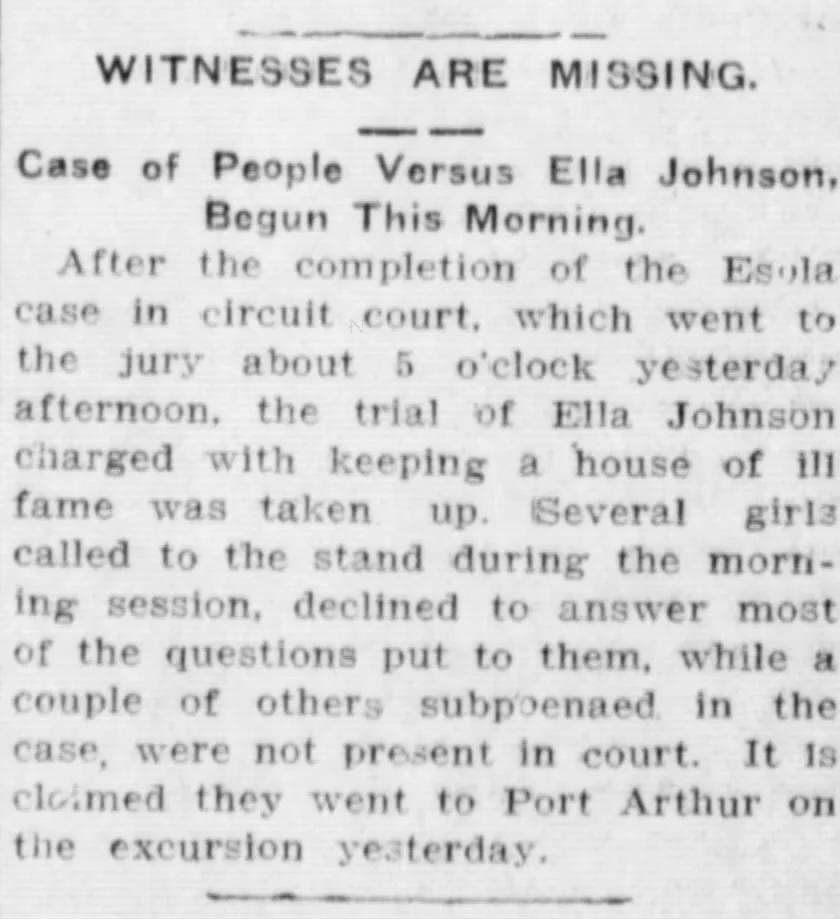
“WITNESSES ARE MISSING.
Case of People Versus Ella Johnson, Begun This Morning.
After the completion of the Esjala case in circuit court, which went to the jury about 5 o’clock yesterday afternoon, the trial of Ella Johnson charged with keeping a house of ill fame was taken up. Several girls called to the stand during the morning session, declined to answer most of the questions put to them, while a couple of others subpoenaed in the case, were not present in court. It is claimed they went to Port Arthur on the excursion yesterday.”
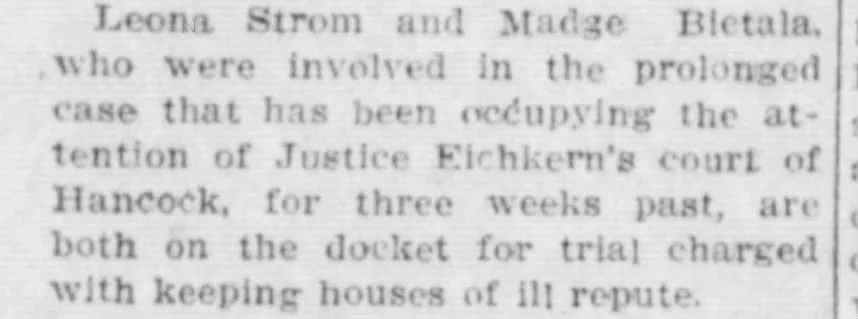
May 25, 1912, (pg. 2) “The Calumet News”
“Leona Strom and Madge Bietala, who were involved in the prolonged case that has been occupying the attention of Justice Eichkern’s court of Hancock, for three weeks past, are both on the docket for trial charged with keeping houses of ill repute.”
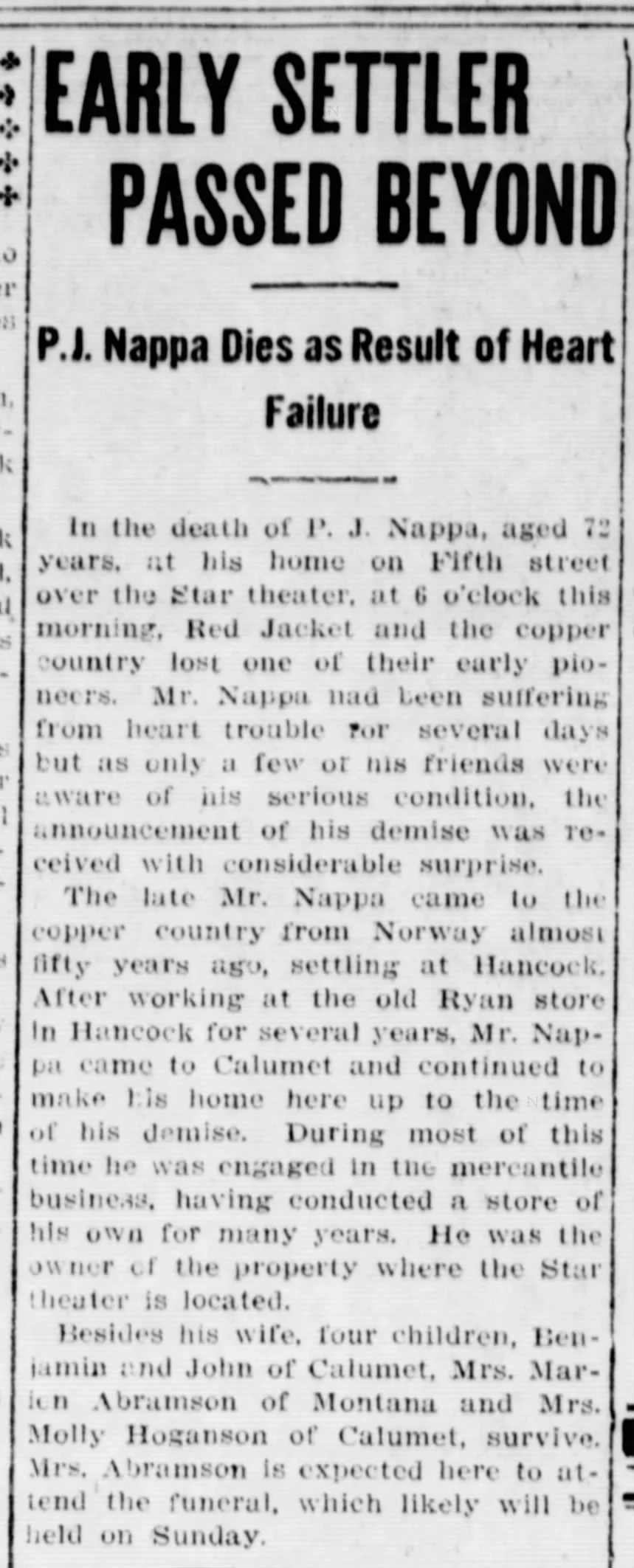
December 11, 1912, (pg. 8) “The Calumet News”
“EARLY SETTLER PASSED BEYOND
P. J. Nappa Dies as Result of Heart Failure
In the death of P. J. Nappa, aged 72 years, at his home on Fifth street over the Star theater, at 6 o’clock this morning, Red Jacket and the copper country lost one of their early pioneers. Mr. Nappa had been suffering from heart trouble for several days but as only a few of his friends were aware of his serious condition, the announcement of his demise was received with considerable surprise.
The late Mr. Nappa came to the copper country from Norway almost fifty years ago, settling at Hancock. After working at the old Ryan store in Hancock for several years, Mr. Nappa came to Calumet and continued to make his home here up to the time of his demise. During most of this time he was engaged in the mercantile business, having conducted a store of his own for many years. He was the owner of the property where the Star theater is located.
Besides his wife, four children, Benjamin and John of Calumet, Mrs. Martin Abramson of Montana and Mrs. Molly Hoganson of Calumet, survive. Mrs. Abramson is expected here to attend the funeral, which likely will be held on Sunday.”
Mollie/Molly Nappa, who was sent to the state school, returned home and later married, showing a hopefully happy conclusion to her story.
In the Copper Country’s boom years, the towns expanded rapidly, leading to both neighborhoods of respectable businesses and homes and streets filled with saloons and homes that hid sex work behind locked doors. These articles document how sex work and brothels were discussed and regulated in the Copper Country during this period of rapid growth. They are presented without judgment of the individuals named and are included to preserve an often overlooked and difficult part of the region’s historical record.
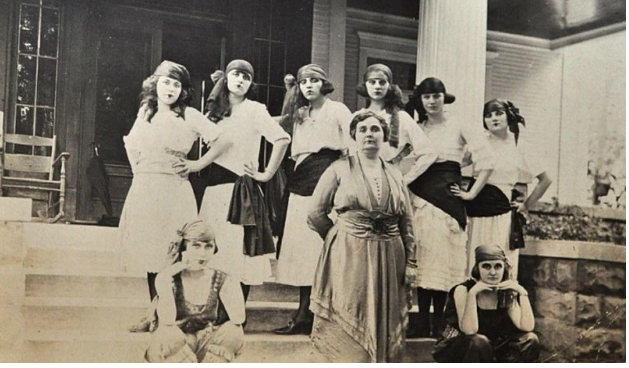
A madam and sex workers, nineteenth century (location unknown).
Sources
(for all articles/photos not marked “The Calumet News”)
“Cities & Towns – Calumet – Street Scenes.” April 1899. Photograph. Roy Drier Photograph Collection, MTU Neg 00457. Michigan Technological University Archives and Copper Country Historical Collections.
“Cities and Towns – Hancock – Street Scenes.” Undated. Photograph. Copper Country Vertical File Photograph Collection, MTU Neg 03432. Michigan Technological University Archives and Copper Country Historical Collections.
Clark, Ella. 1900 United States Census. Census Place: Hancock, Houghton County, Michigan; Roll 714; Page 4; Enumeration District 0186. Ancestry.com.
“Hancock Street Scenes.” 1911. Photograph. Roy Drier Photograph Collection, MTU Neg 00252. Michigan Technological University Archives and Copper Country Historical Collections.
“Madam and Sex Workers.” Photograph. 99.1 WFMK. https://99wfmk.com/lansing-brothel-1880s-1890s/.
“Men in Bar.” Photograph. “Detroit Croatians.” Facebook post. https://www.facebook.com/groups/254996874835529/posts/2756413081360550/.
“The Portage Lake Gazette.” November 25, 1875. The Daily Mining Gazette.
Oak Street, Red Jacket. 1900. Map. Sanborn Fire Insurance Map. Sanborn Map Company. Keweenaw History. https://www.keweenawhistory.com/.
State Industrial Home for Girls. “Vintage Michigan Postcards.” Facebook post. (post deleted).
“Station: Calumet, MI Depot.” Photograph. Michigan Railroads. https://www.michiganrailroads.com/stations-locations/95-houghton-county-31/870-calumet-mi.
Tezcuco Street, Hancock. 1888. Map. Sanborn Fire Insurance Map. Sanborn Map Company. Keweenaw History. https://www.keweenawhistory.com/.
“Woman on Oak Street, Calumet.” Photograph. Credit to Jack Deo, Superior View. From the collection of Blake Curto.
“Woman on Bike.” Photograph. Ephemeral New York. https://ephemeralnewyork.wordpress.com/2016/02/29/how-bicycles-helped-liberate-women-in-the-1890s/.
“Would It Have Been the Same in the Case of a Man?” Unknown publication, July 9, 1903, unk. Crime vertical file. Houghton County Historical Society Archives.
